Archive
State legislators could help change the culture in DDS. Will they?
More than a month ago, we brought a case involving the apparent neglect of a resident of a provider-run group home and the intimidation of his family to the attention of the co-chairs of the Legislature’s Children, Families, and Persons with Disabilities Committee.
Then on March 5, I forwarded a follow-up post about the case to the committee co-chairs, Senator Robyn Kennedy and Representative Jay Livingstone.
We think the case illustrates a disturbing and ongoing state of dysfunction in the state’s system of care of persons with intellectual and developmental disabilities (I/DD). It seems that the Department of Developmental Services (DDS) is doing little or nothing to change a culture in the system that appears to foster this level of neglect and intimidation.
As our posts reported, Rachel Surner informed the upper management of her son’s corporate provider-run group home in June 2022 of an incident in which the staff neglected to give her son Ian his portable urinal. Ian, 31, has spastic quadriplegia, a condition that has left him with the limited ability to move only his arms.
Having received distress texts on her phone from her son, Rachel had to go to the home herself at 6:45 in the morning to retrieve his urinal from the floor next to his bed.
Then in January of this year, the same thing happened again when the same staff member again allegedly neglected to give Ian his urinal. The response of the provider, the Justice Resource Institute (JRI), however, was to blame Rachel for allegedly being “disruptive” in the home, and to impose severe restrictions on her visits to her son.
DDS stated that Rachel and her husband would either have to comply with those restrictions or remove Ian from the home.
Rachel had complained about numerous other problems in the home as well, including a failure to regularly shower or toilet Ian, and a failure to involve him in community activities.
On February 12, I talked to a member of Senator Kennedy’s staff at a meeting she held with constituents in my hometown of Berlin, MA, and gave her information about Ian’s case and that of another mother whose son was also severely neglected in a provider-run group home.
In that second case, the son had suffered extreme dental decay, weight loss, removal of prescribed medications, and unexplained injuries. The aide said she would bring the cases to Senator Kennedy’s attention.
Not having heard anything more by the beginning of this month, I stated in my March 5 follow-up message to both Kennedy and Livingstone and their staffs that we would be happy to arrange for our members to provide them with further information about the ongoing problem of abuse and intimidation in the DDS system.
Even The Boston Globe has written about this culture, noting earlier this year that when parents of children with autism have complained about abuse and neglect in DDS-funded group homes, they have been labeled as “too demanding.” And a number of parents who spoke to the newspaper requested anonymity because “they were afraid that state officials or providers would retaliate against them.”
Obligation to change the DDS culture and system
We think legislators have an obligation to help change a culture within DDS that appears to perpetuate poor care and intimidation of families in the provider-run group home system. As co-chairs of the Children and Families Committee, Kennedy and Livingstone are in a position to exert pressure on DDS to change that culture.
Last fall, we first met with both Senator Kennedy and Representative Livingstone on Zoom to make a case for the preservation of state-run residential services. In our view, state-run services are more accountable to both families and taxpayers than are corporate provider-run services.
Levels of abuse and neglect in the Wrentham and Hogan facilities are significantly lower than in the provider-run group home system, based on a review of state data that we undertook.
On a per-client basis, state-operated group homes were well below average in terms of both substantiated allegations of abuse and criminal referrals between Fiscal 2010 and 2019. Also, we found that the state-run Wrentham and Hogan Intermediate Care facilities were at or near the bottom of the list of total providers in those measures.
Yet, the Wrentham and Hogan Centers and the state-run group homes are ultimately facing closure because a succession of administrations has largely closed their doors to new admissions.
Last fall, Senator Kennedy said she would help us arrange a meeting with Governor Healey in which we would raise these concerns. We urge people to email Kennedy’s and Livingstone’s offices, and forward a link to this blog post.
You can email them at Robyn.Kennedy@masenate.gov and Jay.Livingstone@mahouse.gov.
Remind them that it is time to change the culture in DDS and to take concrete steps, including setting up a meeting with the governor, to preserve state-run services in the DDS system.
Thanks!
Mother says neglect and intimidation continued at her son’s group home
More than a year and a half ago, Rachel Surner informed the upper management of her son’s group home in Ashland of a disturbing incident in which the staff neglected to give her son, Ian Murawski, his portable urinal.
Rachel had to come to the house herself at 6:45 in the morning in June 2022 to retrieve the urinal, which was on the floor next to Ian’s bed. She said she was met at the door with resistance and intimidation by a staff member on duty.
Ian, 31, has spastic quadriplegia, a condition that has left him with the limited ability to move only his arms. Despite that, Ian, who has an intellectual disability, is an engaging young man with a major musical singing talent.
Rachel also informed the Department of Developmental Services (DDS) about the June 2022 incident, and a range of other problems in the group home, which is run by the Justice Resource Institute (JRI), a corporate DDS provider. But nothing was ever done to improve the situation, she said.
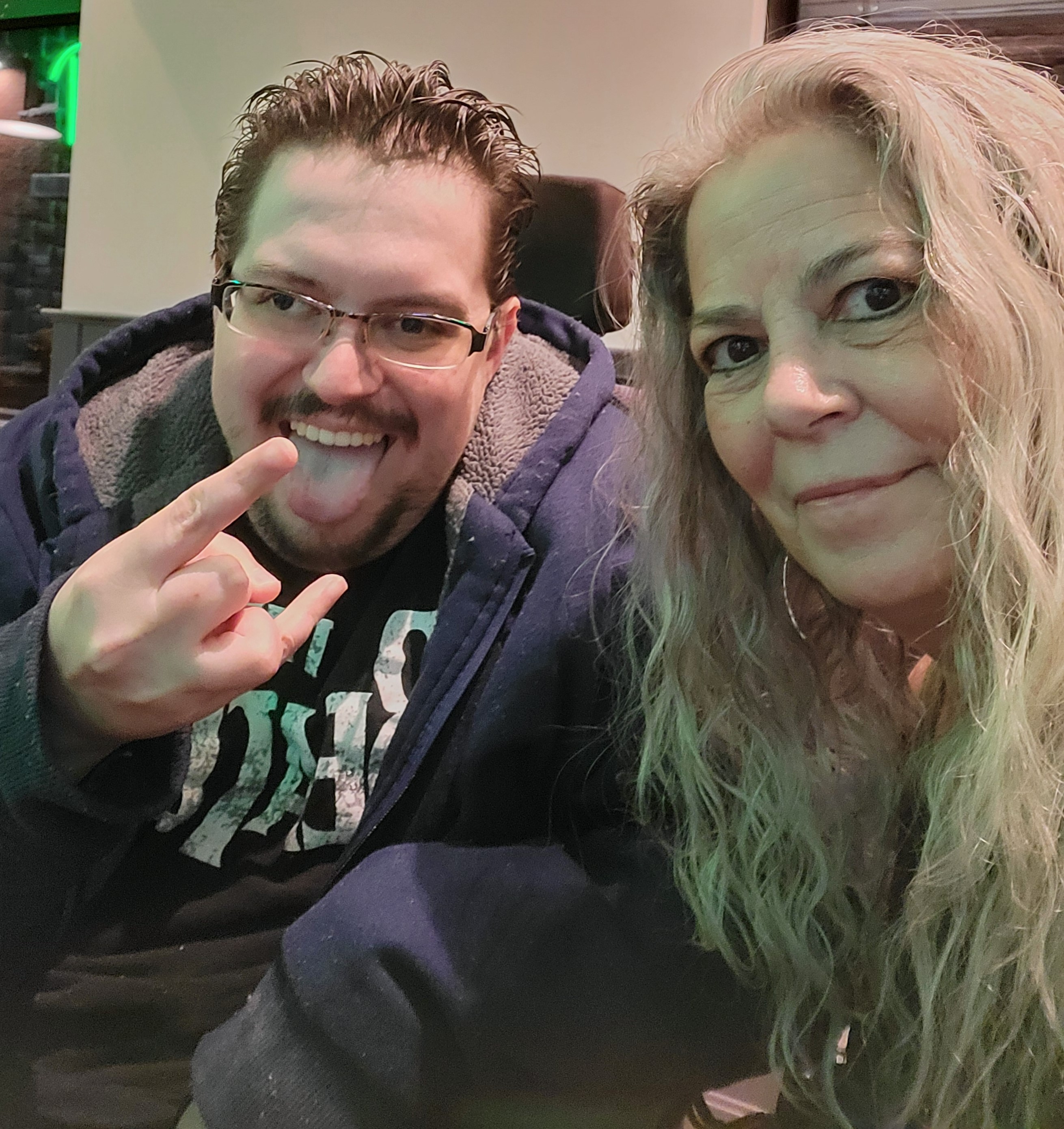
Ian Murawski and his mother, Rachel Surner
Following an almost identical incident in January of this year in which the same staff member again neglected to give Ian his urinal, Rachel said JRI’s response was to blame her for allegedly being “disruptive” in the home.
JRI then imposed severe restrictions on her visits to her son, and DDS stated that she and her husband would either have to comply with those restrictions or remove Ian from the home.
Rachel and her family chose the latter course. They took Ian home last month to live with them.
They are seeking another placement, and are interested in the Wrentham Developmental Center or possibly a state-operated group home. But, Rachel said, DDS has provided few answers to their questions about those options.
As we argue below, we believe that in issuing the visitation restrictions, JRI violated DDS regulations ensuring a right to visitation. Also, we think DDS violated its transfer regulations that prevent the termination of residential services to individuals without due notice and due process.
This is one of many cases in which providers and DDS appear to have placed the blame on family members for being disruptive or overly demanding when they have attempted to advocate for their loved ones in group home settings. (See here, here, and here.) In all of these cases, DDS has appeared to side with provider staff against the families when those families are simply complaining about substandard care.
‘Passive-aggressive torture”
Rachel and her husband, who deny having ever caused a disturbance in the home, said the latest incident in January occurred after her son had called her repeatedly, screaming and “in crisis.”
Ian, who is high-functioning despite his disability, takes medication for extreme anxiety and depression, which can reach levels high enough to cause psychosis, Rachel said. However, the staff didn’t give the medication to Ian regularly because they didn’t pay enough attention to him to recognize his symptoms of anxiety, she said.
According to a DDS complaint intake letter about the January 21 incident, Rachel went to the house from her home in Holliston at 11:30 p.m. after being unable to reach the staff by phone. A JRI attendant on call, whom she also had contacted, had told her that Ian was asleep. Rachel said she knew this wasn’t the case as Ian was still calling and texting her in distress.
When she entered the house, she found that Ian was awake in his bed, which had been left in an upright position. He had no remote controls for adjusting the bed, no urinal, no water, and the overhead light had been left on. Without access to the remote controls, there was no way Ian could adjust his bed or get to sleep.
According to the intake letter, a staff member, meanwhile, was lying under covers with a pillow on a couch in the living room, and was speaking on a phone in a foreign language. When Rachel asked repeatedly where the remote controls were, the staff member refused to answer and said he was on a call. At that time, Rachel pulled her phone out of her back pocket to call her daughter, and the staff person then lunged at her to grab it from her, the intake letter stated.
This was the same staff member, according to Rachel, who had neglected in the previous incident in June 2022 to give Ian his urinal. The January 2024 intake letter quoted Rachel as referring to the failure to give Ian his remote controls and urinal as “a passive-aggressive form of torture.”
The latest incident is under investigation by the Disabled Persons Protection Commission (DPPC).
June 2022 incident
As we reported last April, Ian repeatedly texted Rachel early one morning in June 2022 from the group home that he needed to urinate, but couldn’t locate his portable urinal.
Rachel said she tried to call the house, but the phone was off the hook; so at 6:45 a.m. on a Sunday morning, she drove there. As she waited for someone to answer the door, she could hear Ian crying for help.
Rachel said the same staff member, who later neglected to provide Ian with his urinal and remote controls in January of this year, came to the front door, but refused at first to let her in. She went past him into the house, and went to her son’s room where she saw that his urinal, which was supposed to be on his bedside table, was on the floor.
Rachel said that when she then tried to leave the room to give Ian privacy, the staff member initially blocked the door to the bedroom and wouldn’t move to let her out. He later moved away slightly, but she felt threatened and intimidated by his actions.
She said she later asked the staff member why he didn’t respond to Ian’s plea for help, to which he replied that Ian “’never told us he needed help.’” She said she replied to the staff member that she could hear Ian’s cries for help while she was standing at front door.
Problems not corrected
Rachel said neither JRI nor DDS made efforts to correct problems in the group home, such as the urinal incidents, that she brought to their attention. One other example of that was her discovery in July of 2023, after bringing Ian home from a musical gig at a restaurant in Ashland, that overnight staff in the home appeared to be asleep in the living room when they arrived. As noted above, she said that issue continued through this past January.
Other ongoing problems have included:
Hygiene neglect
Rachel said Ian went for days with no shower or toileting in the group home. He also went for days without having his teeth brushed. His bed linens filthy, she said, and he was often dressed in same clothing as the day before. His finger and toenails were often unclipped, and he was often not shaved.
Lack of socialization, activities, and community involvement
Rachel contends the staff rarely took Ian out of the house on community outings. She said this was due to the staff’s lack of involvement in general with him. She noted that Ian needed far more care than the other clients in the home who are all able-bodied.
Visitation restrictions violated DDS regulations
Rachel said that after the incident on January 21 of this year, JRI’s response was to issue visitation restrictions against her, which both she and a JRI program director were supposed to sign.
A copy of the unsigned and undated visitation restrictions contains the introductory statement that, “Inappropriate and disruptive behavior creating an environment detrimental to program services have occurred during visits of Rachel Surner to (the group home).”
Rachel maintains that statement is completely untrue. She maintains that neither she nor any other members of her family were ever disruptive in the home.
Rachel was then supposed to agree to the following restrictions:
- Visits may occur no more than once per day for a maximum of one hour per visit.
- No video recording of staff or other individuals may take place during the visit. (Rachel maintains she never recorded staff, but live videotaped her visits so family members could be witnesses to interactions in the home.)
- Drop-offs without entering the home or property must also be scheduled in advance with JRI management and are limited to 10 minutes.
- Parking on the street outside the property is prohibited except during agreed-upon visits.
- JRI may deny plans for any visit if it is not deemed necessary or it is detrimental to the program.
- JRI staff have the right to terminate a visit at any time. I (Rachel) agree to leave peacefully when requested or required to do so.
Rachel said the DDS assistant area director stated to her that she would have to agree to the restrictions in order for Ian to continue to live in the group home.
In our view, JRI, in issuing the visitation restrictions, was acting in violation of DDS regulations, which permit visitation by a guardian “to the maximum extent possible.” According to the regulations, “Reasonable restrictions” may be placed on the visits “to avoid serious disruptions in the normal functioning of the provider.”
Given that Rachel denies that her family ever caused any disruptions, we think DDS should have given the Surners a chance to rebut the allegation. That didn’t happen.
We also think DDS violated the Department’s transfer regulations, which prohibit the Department from terminating a residential placement without giving 45 days’ notice, specifying an alternative location and obtaining the guardian’s consent to it.
Desire for a new placement
Rachel said that since Ian’s discharge from the group home, he is not currently receiving any services from the Department. She said that while DDS did provide her with a list of other group homes, the Department has not answered many of her questions about the list.
This case is one of many demonstrating that the DDS-funded provider-run residential system has become dysfunctional. Problems identified by family members are not corrected, but the family members themselves often become the focus of blame.
DDS has consistently also blamed these problems on staffing shortages. But that doesn’t explain why the Department apparently didn’t act in this case to ensure that overnight staff were not sleeping on the job, or that the staff treated Ian with dignity and respect. Repeated failures to provide a portable urinal to a person with quadriplegia is inexcusable, and is rightly being investigated as abuse by DPPC.
Inadequate staffing also doesn’t explain why the Department would agree to an excessively restrictive visitation policy against the family, or why the Department didn’t seek Rachel’s response to the charge that she was being disruptive in the home.
DDS needs to reexamine and change its culture. In our view, this is a key test for the Healey administration.
Has the state been using hundreds of millions of taxpayer dollars in a reserve fund as promised to boost direct-care wages?
The state has appropriated more than $400 million in taxpayer funds to a human services provider reserve fund over the past two years, with at least three quarters of that amount supposed to be used to raise wages of direct-care staff of human services providers in Massachusetts.
Low wages have caused a continuing staffing shortage and worsening care in corporate provider-run group homes funded by the Department of Developmental Services (DDS).
Governor Healey is now pledging an additional $390 million to the “Chapter 257 Human Services Reserve” line item in the coming Fiscal Year 2025 budget, bringing the total appropriations to nearly $800 million. Chapter 257 was a law passed in 2008 that was intended to biennially set and increase state payment rates to human services providers.
But there seems to be little or no available information thus far as to:
- The amount of money in the reserve fund that has actually been spent to date to boost direct-care wages;
- How the administration or Legislature are able to track whether providers are raising those wages.
The reserve line item has included language in the FY ’23 and ’24 budgets stating that “any human service provider receiving revenue under said Chapter 257 shall use not less than 75 percent of received funds for compensation for their direct-care, front-line and medical and clinical staff.” However, the line-item language does not explain how that requirement would be carried out or enforced.
An administration spokesperson told us that that the governor’s proposed $390 million appropriation to the provider reserve fund in FY ’25 “is based on a model that supports wages no lower than $20/hour.”
One provider executive told us their agency was paying direct-care workers $17.50 an hour. So, presumably, the administration expects that that provider’s workers will receive at least a $2.50 per hour increase in their wages.
But whether those wage increases will actually happen is unclear. Similar promises in the past haven’t been met.
Funding rates for provider-run group home and day programs are set by regulation, after a public hearing process. Those rates are calculated based on what appear to be “benchmarked” expenses for wages and non-salaried costs. It isn’t clear, however, that the providers are required to pay those benchmarked wages.
What does seem to happen regularly is that the provider executives are paid higher and higher salaries and other compensation, while direct-care worker wages stay relatively stagnant.
Compare, for instance, the average direct-care salary in Massachusetts in FY ’22 of $43,260 (see below) with the total compensation that year to David Jordan, president of the Seven Hills Foundation, a DDS provider, of $1.2 million, and to his wife Kathleen Jordan, executive vice president and CEO, of $455,351.
Inspector general and state auditor had similar oversight concerns about payment of wages
In 2022, the Massachusetts Inspector General’s Office stated it had investigated complaints that state Executive Office of Health and Human Services (EOHHS) providers had misused $139 million in COVID pandemic relief funds that were supposed to be spent on direct-care staffing and other activities. Instead, providers allegedly spent the funds on executive salaries.
The IG stated that EOHHS did not fully implement its recommendations to develop detailed provider expenditure reports regarding state funding intended to be spent on staffing. The IG also stated that EOHHS failed to provide guidance to providers on reporting those expenditures.
In 2019, the state auditor found that major increases in funding to the human services providers Under Chapter 257 had led to surplus revenues for the providers, but had resulted in minimal increases in wages to direct-care workers.
We are asking both the IG and State Auditor to investigate the management and oversight of the reserve fund.
No clear oversight or tracking of direct-care wages by the state
It remains unclear how the state verifies or tracks the amount that human services providers pay in wages to their direct-care and other frontline workers. We asked this question of both administration officials and legislators, and have received no answer to it.
Oversight processes used by the state involving the provider reserve fund raise a number of similar questions.
For instance, in the FY ’23 and FY ’24 state budgets, the provider reserve fund language required EOHHS to provide a report to the Legislature’s House and Senate Ways and Means Committees on “ongoing and proposed initiatives” to increase direct-care wages. Those reports were required to be submitted in March 2023 and April 2024 respectively.
However, the March 2023 report, which COFAR obtained under a Public Records request, did not appear to provide that information. There was no mention in the report of any specific initiatives to raise direct-care wages, or even of the amount of funding appropriated under the provider reserve line item in that fiscal year.
The requirement that providers spend 75% of their reserve account funding on direct-care wages wasn’t mentioned in the March 2023 EOHHS report. The report was simply a spreadsheet that listed provider wage information, which the report stated had been collected from state Uniform Financial Reports (UFRs) and from the federal Bureau of Labor Statistics (BLS).
The EOHHS report did show that the average direct-care wage in Massachusetts as reported on provider UFRs was $43,263, or $20.80 per hour, in FY ‘22. That average had increased from $18.38 – or by 13% — from FY ’21.
Those wage averages were lower than BLS median numbers listed in the EOHHS report. The BLS median for FY ’22 was $21.94 per hour. It doesn’t appear that there is any requirement that providers pay the BLS median amount.
Also, based on our own review of UFRs, it doesn’t appear that those reports offer a way to track whether individual providers are actually spending 75% of their state revenues on direct-care wages. The reports we reviewed showed the amounts providers paid in total salary and wages, but did not appear to us to clearly break out the providers’ expenditures on direct-care wages.
We asked OSD for an explanation of the breakdown of expenses under the UFR system. An OSD official referred us to EOHHS, which did not respond to our request.
No directives issued on raising direct-care wages
In January, we also sent two Public Records Law requests to EOHHS and DDS, seeking documents concerning the impact of the Reserve fund on direct-care wages and any directives that have been issued to providers about spending 75% of their reserve account funding on direct-care wages.
In response to our Public Records requests, both EOHHS and DDS stated that they had no records of any such directives; and they provided no records concerning the impact of the reserve account funding on wages.
Healey’s budget doesn’t include wage increase language
It appears that the administration and the Legislature have at least one major difference in their planned approach to addressing the wage problem. Governor Healey’s proposed budgets for FY ’24 and ’25 have not included the provider reserve fund language inserted by the Legislature requiring providers to direct 75% of their funding to direct-care wages.
That language was inserted by the Legislature in the Fiscal ’23 and ’24 budgets. It remains to be seen whether the Legislature will once again insert the language in the FY ’25 budget.
It’s unclear why the governor has not included that language in her budget proposals. A request to the governor’s Office of Constituent Services and to EOHHS for a response to that question about the reserve fund requirement has gone unanswered.
We support higher pay to direct-care and frontline workers. We ourselves have called for a minimum wage of $25 per hour for those workers.
At the same time, we have heard the promises before. Each year, more taxpayer money is given to the providers in line with those promises. DDS-funded group home providers received roughly $1.7 billion this year. Yet, the promises don’t appear to be kept. A few years ago, the state auditor found that those providers were earning surplus revenues as a result of all of that state funding.
We think the state needs to enact tighter controls over the billions of dollars it gives to the providers in order to ensure that they really do honor the promises of higher direct-care wages. To the extent providers are still earning surplus revenues due to funding from the reserve account, the state needs to make sure that the money really is going to direct-care workers and not to executives.
Governor Healey’s proposed FY ’25 budget for DDS raises questions about her priorities for state vs. corporate-run care
Governor Maura Healey last week proposed a budget for Fiscal Year 2025 that includes an increase in funding for the Wrentham and Hogan Intermediate Care Facilities (ICFs) and state-operated group homes in Massachusetts.
But the governor’s budget doesn’t appear to be an attempt to change a longstanding practice of underfunding those state-run services and steadily increasing funding to corporate group home and community-based day program providers.
Healey proposed an increase of only $1.2 million in the ICF line item, which would amount to a funding hike of less than 1%, for FY ’25. That is well under the current average inflation rate for New England of 2.9%. As such, the governor’s budget proposal represents a cut in the ICF line item when it is adjusted for inflation.
Healey’s proposed $15.3 million increase in the state-operated group-home line item would amount to a 4.8% funding boost. While that is above the inflation rate, it is still far less than the governor’s proposed percentage increases in many DDS corporate provider line items.
For instance, Healey is proposing an 18.5% increase in the community-based day program line item, a 19.3% increase for transportation providers, and a 22% increase for respite providers.
Corporate group home cut would be offset by reserve account increase
Healey cut the DDS corporate provider group home line item by $40.3 million earlier this month as part of an across-the-board series of “9C” cuts in the face of a decline in projected revenues in the current fiscal year.
But in her FY ’25 budget, the governor is proposing not only to restore $23.2 million of the $40.3 million cut to the line item, she is also proposing a record-breaking $217 million increase to a separate reserve fund for the corporate providers. The governor’s FY ’25 budget would bring total funding under the Human Services Provider Reserve fund to $390 million.
So it would appear that despite the declining revenues, corporate DDS and other human services providers would receive a net increase of nearly $200 million under the governor’s budget plan.
Questions about provider reserve fund
Last week, The Boston Globe reported that Healey was planning in her FY ’25 budget to “tackle the staffing crisis plaguing social service care providers with a big investment…” That investment appears to include the governor’s proposed $390 million appropriation to the human service provider reserve fund, plus $95 million from a number of other reserve funds.
The total of $485 million in proposed additional funding is projected by the administration to raise direct-care wages to $20 an hour, “at the lowest,” the Globe reported.
We have a number of questions about the oversight of the reserve fund, however. We have long been unable to get answers to those questions, including the amount that has been spent from the fund to actually raise direct-care wages.
Also, for the past two fiscal years, the Legislature has inserted language into the line item for the reserve fund stating that 75% of the funding under the account must be directed to boost direct-care wages. Yet, this language is not included in Governor Haley’s FY 25 proposal for this line item.
Also. the governor’s FY ’25 budget plan indicates that zero dollars were expended in FY ’23 from this same line item that year even though $285 million had been appropriated to it. (See screenshot below.) It’s not clear what has been expended from the line item in the current fiscal year. This raises further questions for us as to where the money in the line item gone.

Minimal increase for ICFs
Gov. Healey’s FY ’25 budget would increase the ICF line item (5930-1000) by $1,777,048, or less than 1% over the current year appropriation. The FY ’25 ICF line item proposed amount is $124,809,632.
We are recommending a $5 million, or 4%, increase in the ICF line item in the FY ’25 budget. That would nominally raise the line item to $128,577,887. That increase would allow the line item to keep pace with inflation moving forward.
The news is better for the state-operated group home line item (5920-2010). The governor’s FY ’25 budget would raise that line item by $15,327,687 or 4.8%. That would raise the line item to $333,099,736.
ICF budget language
We are continuing to recommend changes in the ICF line item language. (The language doesn’t appear to be a part of the governor’s proposed budget. It gets added by the Legislature.)
The legislative language in the current year budget states that DDS must report yearly to the House and Senate Ways and Means Committees on “all efforts to comply with …(the) Olmstead (U.S. Supreme Court decision)…and… the steps taken to consolidate or close an ICF…” (my emphasis). However, closing institutions was not the intent of the Olmstead decision, which was written by the late Justice Ruth Bader Ginsburg.
We are concerned that the misstatements in the ICF line item in the state budget each year could allow the administration to justify continuing to underfund the line item, and possibly to seek the eventual closures of the Wrentham and Hogan centers.
We believe the budget language should be changed to state: “…the steps taken to consolidate or close an ICF and the steps taken to inform families of the choices available for residential care including ICF care.”
Secondly, the legislative line item lists three conditions for discharging clients from ICFs to the community, but leaves out one of the key conditions in Olmstead, which is that “the client or their guardian does not oppose the discharge.” We are requesting that that condition be added to the language in the line item.
In sum, we hope the governor and her staff will begin to understand the importance of state-run services as a part of the fabric of care for persons with intellectual and developmental disabilities. We are seeking a meeting with the governor and her staff to explain the disastrous result if current budget trends are allowed to continue.
Secondly, we think the administration and the Legislature need to understand that adequate oversight is needed of the hundreds of millions of dollars in budget appropriations that are intended to raise direct-care staff wages.
Family thanks DDS commissioner for referral of sister to the Wrentham Center
[Editor’s Note: We are reprinting a letter below that was written by Joan Norman, a sister of Ellen Gallagher. Ellen, who has an intellectual disability, had been living in a corporate, provider-run group home, which was moving to evict her because they admittedly couldn’t meet her needs.
Ellen has Alzheimer’s disease and limited mobility mainly due to limited vision issues and age. Joan describes her as “sweet and social,” but said she had been declining in the group home due the advancement of her disease and “sub-par medical and mental health care.”
In November, after advocacy on Ellen’s behalf by her family and members of COFAR, Department of Developmental Services (DDS) Commissioner Jane Ryder granted Ellen a rare admission to the Wrentham Developmental Center.
The number of residents at Wrentham and the Hogan Regional Center has been steadily declining for several years. That is because a succession of administrations has had a policy of declining to offer Wrentham or Hogan as residential options even when families ask for them.
We think Joan’s letter to Commissioner Ryder is an eloquent testimonial to the quality and importance of the care provided by state-run Intermediate Care Facilities (ICFs) such as the Wrentham and Hogan Centers.]
_____________________________________________________________________________________________
Dear Commissioner Ryder,
This letter is to formally thank you for supporting our sister’s referral to the Wrentham Developmental Center (WDC) back in November.
As you might remember, Ellen Gallagher, a 55-year-old Down Syndrome woman on hospice, with advanced Alzheimer’s, was living in her group home’s family room due to losing the ability to walk or get to her 2nd floor bedroom for almost 4 months.
We fought hard to find the appropriate placement with 24/7 nursing care so that Ellen could live out her remaining time with dignity and proper medical and mental health services. She needs services that include continuity and onsite care, rather than visiting the ER, hospital stays and unnecessary tests when she has had minor issues such as dehydration.
Now that she has settled in at WDC and has spent 6 weeks there, we can confirm it is an amazing living environment where her medical needs are finally being met and she is safe. She now has a handicap accessible bathroom and there are appropriate safety measures to match her abilities and changing needs.
We realize there is a push to keep people out of ICFs like WDC, but for medically complex clients it should be an option and it should be offered willingly by DDS. Families should not have to fight so hard for the care they need. ICFs are not the institutions of the past.
In this case, WDC is an example of the type of culture that is needed in community-based homes where a client’s medical care doesn’t involve neglect, safety issues and unprepared front-line workers.
We suspect costs are a driving factor behind limiting ICF placements. If you look at costs in community-based homes, many medically complex people end up with unnecessary emergent care because they don’t have onsite nursing care. Caretakers (with little to no medical background) use ambulances and hospitals “to be safe” when issues arise. Or worse, many clients go without proper medical care when they need it.
In my sister’s situation, in one incident, she was so dehydrated she ended up in the hospital nearly unconscious for days after being left virtually alone with a COVID infection. The staff handed her over to us after her isolation period, and we took her directly to the ER. She never gained back her strength, and it began a downward spiral of physical and mental decline for her.
In theory, nursing staff should be available to coordinate client medical care in group homes, but that is not how it often works. This can result in sub-par care, but also higher costs for the state’s Medicaid program when emergent care and unnecessary hospitalizations are used in place of qualified medical workers who can properly assess and address medical issues properly.
We urge you to continue supporting families who are seeking placements in an ICF like Wrentham, particularly for medically complex clients. Quality 24/7 medical care is not available in community-based homes, or it is patched together at best. WDC can offer this type of care.
There is a federal regulation supporting the choice of an ICF: Individuals seeking care, and their families and guardians, should be given the choice of either institutional or home and community-based services. [42 C.F.R. § 441.302(d)]. We got our choice for Ellen, and we sincerely thank you for supporting that decision. Please consider supporting others as well.
Sincerely,
The family of Ellen Gallagher
Gov. Healey cuts provider-run group home and other DDS spending as budget shortfall looms
Faced with $1 billion in declining state revenue projections, Governor Healey yesterday ordered $375 million in spending cuts across the board in state government, including in programs for persons with intellectual and developmental disabilities (I/DD).
It appears the governor’s actions, known as “9C” cuts, will affect three line items in the Department of Developmental Services (DDS) budget: Community Residential (corporate provider-run group homes), Community Day and Work programs, and the Autism Division in the current fiscal year.
No cuts are being made in the line items funding the Wrentham and Hogan Centers or the state-operated group homes.
However, the Community Residential line item (5920-2000) will be cut by $40.4 million, bringing funding under the line item close to even with last year’s funding level. Not only does that amount to a cut when adjusted for inflation, it is occurring in the middle of the current fiscal year.
But DDS Commissioner Jane Ryder said the funds being cut in the Community Residential account are “projected amounts to be reverted anyway due to delays in placements and getting back to services,” according to the Arc of Massachusetts, a key lobbyist for DDS-funded providers. The Arc reported that Ryder promised that, “no (provider) contracts are being amended.”
It does appear, however, that the Community Residential cut could reduce planned increases in wages of direct-care staff in provider-run group homes. According to the Arc, the cut could affect “recruitment of qualified direct support, supervisory, and clinical staff; fringe benefits; and training allowances in our home and community services.”
The Community Day and Work line item (5920-2025) will be cut in the current fiscal year by $13.8 million, and the Autism Division line item (5920-3030) will be cut by $1 million.
The day program cut is also potentially concerning given the ongoing shortage of adequate staffing and meaningful activities in those programs.
Another source of concern is a $294 million cut that Governor Healey has made in MassHealth fee for service payments. Although that cut won’t affect the DDS budget, it will have an unclear effect on services in MassHealth-funded programs for people with I/DD.
The following breakdown of the governor’s 9C cuts affecting DDS line items came from the State House News Service:

Despite Commissioner Ryder’s reassurances, these cuts will not help the situation in the provider-run group home and day program system, which The Boston Globe has already characterized as “hobbled by poor staffing and struggling with allegations of abuse and neglect.”
Ultimately, we think these problems are due more to a lack of proper oversight of the provider-run system than to a lack of resources. Nevertheless, across-the-board budget cuts are almost never helpful in solving those problems.
Globe update report has devastating findings about DDS provider-run group home system. Is the administration listening?
In the second of two reports on the corporate, provider-based group home system in Massachusetts, The Boston Globe last week characterized the system as “hobbled by poor staffing and struggling with allegations of abuse and neglect.”
Last week’s article was a follow-up to a report in September by the Globe’s Spotlight Team, which had focused on widespread abuse and neglect in provider-run residential schools for children and teens with autism.
We think the Globe’s reporting raises some important questions, one of which is whether the Healey administration and the Legislature are listening.
The Globe’s reporting echoes assertions about abuse and neglect in the system that we have been making for years. Moreover, we think the Globe is on the right track in noting a key factor plaguing the system, which we have long emphasized, of underpaid and undertrained staff.
Last week’s Globe article stated that most of the parents of autistic children whom the paper had interviewed asserted that, “Massachusetts has never solved long-term systemic problems of low pay and inadequate training” in the system.
The paper noted that although “the state has directed millions of dollars to group home providers to help them recruit and keep staff, pay remains similar to that of some retail and fast food workers; $17 to $20 an hour is typical.”
The Globe further stated that “a number of parents who spoke with (the newspaper) requested anonymity because they were afraid that (as we have long reported) state officials or providers would retaliate against them or their child if they spoke out.”
Paper needs to examine the causes
We hope the Globe will investigate the causes of that culture of retaliation and intimidation of families who complain about inadequate care and even abuse and neglect of their loved ones; and that it will investigate the causes of the underpayment of staff.
Understanding the causes of the underpayment of staff might help explain where the millions of taxpayer dollars went, given the money, as the Globe implied, doesn’t appear to have been used to raise staff wages to any significant degree. It might also explain why direct-care workers in the provider system have historically been underpaid and undertrained.
We think an investigation of the causes will reveal that the corporate provider system has always been been about making as much money as possible for its executives while paying its direct care workers as little as possible. That appears to explain why the privatization of human services has never met the promise of both delivering high-quality care and saving money. It may also explain why continual efforts to raise the pay of direct care workers don’t seem to lead to that result (see Massachusetts Inspector General’s 2021 Annual Report, page 27).
State-run services ignored as potential solution
Last week’s Globe article referred to concerns raised by the Arc of Massachusetts and the Massachusetts Association of Developmental Disabilities Providers (ADDP) — both of which actually lobby for the providers — about the shortage of staff and a lack of available group homes.
But while organizations like the Arc and the ADDP publicly decry the poor care and abuse of clients and the underpayment and shortage of staff, they both oppose a key potential solution to the problem, which would be to open the doors of the Wrentham and Hogan Developmental Centers and provide state-operated group homes as options to individuals seeking residential placements.
The state-run Wrentham and Hogan Centers and state-operated group homes have better trained and better paid staff than the provider-run homes. Yet the state-run facilities are losing population even as the number of people waiting for placements is growing. That is because the administration is not offering state-run facilities as options to people seeking placements, and is even denying requests made by families to place their loved ones in them.
The Arc and the ADDP appear to offer no solutions to those problems other than to ask the state to direct more money to them. In our view, those problems will never be solved unless the state changes the incentives driving privatized care.
Real oversight needed
In addition to providing families with state-run facilities as options for residential care, the state needs to take steps to ensure that group home providers really do raise the pay of their direct-care workers. It could begin to do that by establishing true financial oversight of the provider system. Currently, that oversight is practically non-existent.
Successive administrations and the Legislature have been committed to the privatization of DDS care for decades. They have maintained an extraordinarily close relationship with the corporate provider system in that respect. As noted, the Globe pointed out that both DDS and the providers often retaliate against parents and family members who dare to complain about poor care in the group homes.
We hope the Healey administration will not allow the anti-family culture and the continuing underpayment of direct-care staff in the DDS provider system to continue. We also hope the administration will consider reversing the longstanding administration policy of allowing state-run residential facilities to die by attrition.
The breakdown of the DDS system caused by decades of runaway privatization and mismanagement is finally being reported by the Globe. We hope the Healey administration is listening.
Applicants waiting for months to be found eligible for DDS services due to psychologist shortage
While thousands of persons with developmental disabilities reportedly have to wait months or years for residential and other services from the Department of Developmental Services (DDS), internal departmental emails indicate that hundreds of individuals are also first being forced to wait for up to a year or more just to be ruled eligible for those services.
The emails, which were obtained by COFAR under a Public Records Law request, confirm that DDS is dealing with a backlog of eligibility applications due to a shortage of psychologists who are needed to make eligibility determinations on an individual basis.
One of the more severe backlogs apparently afflicted the DDS Metro Region, which had a backlog as high as 380 in unprocessed applications in recent months, although that backlog was projected to be reduced to 80. One unnamed region had a backlog as of this past September of nearly 600 applications.
Under DDS regulations, the Department must determine eligibility for supports and services within 60 days; but the process has taken more than a year in some cases, according to the internal emails.
The emails, which were provided on November 21, and documents previously provided on October 18, show that DDS had been dealing with the backlog problem at least as far back as January 2021. Also, as we reported, based on the first set of documents, DDS was the focus of a federal investigation of an inordinate delay in processing at least one application.
Lack of coordination in dealing with the backlog
The internal emails also indicate there has been a lack of coordination among DDS regions in responding to the backlog problem, and that some regions have experienced more severe backlogs than others.
The emails further suggest that there had been no statewide meeting among DDS regions to discuss the backlog problem until this past September. Discussions about the backlog issue appear to have largely been held within or between individual regions.
In one case, the director of the Northeast Region emailed the Central West and Southeast regional directors in September to ask if either or both of them could help with the Northeast Region’s backlog.
OCR investigation of complaint based on eligibility delay
The federal Office for Civil Rights (OCR) with the U.S. Department of Health and Human Services investigated at least one complaint that an inordinately long delay by DDS during the past two years in processing an application for services amounted to discrimination against the applicant.
It took more than a year for DDS to determine that the applicant was, in fact, not eligible for DDS services. Under the Department’s regulations, eligibility determinations should take no longer than 60 days.
The OCR ultimately determined that DDS had not discriminated against the applicant. However, the federal agency noted that DDS had acknowledged that the delay in processing the application was due to “limited clinical resources.”
According to the OCR report, DDS also stated that, “the departure of a full-time RET (Regional Eligibility Team) psychologist in June 2021 affected the turnaround for reviewing applications.” Under DDS regulations, the Regional Eligibility Teams consist at least one licensed doctoral level psychologist, an individual with a master’s degree in social work, and a Department eligibility specialist.
Backlog issue dates back at least to January 2021
According to the OCR report, the complainant alleged that the DDS Regional Eligibility Team had received their application for adult Community Developmental Disability (CDD) supports in January 2021. But it wasn’t until February 2022, or more than a year later, that the applicant was evaluated for his or her eligibility.
The emails COFAR received from DDS were dated from July 2022 through this past October. One of the email threads indicated that an applicant for services had been waiting without a determination from September 2021 through July 2022. A July 20, 2022 email in that thread, apparently between employees of the DDS Southeast regional office, stated that the individual had applied for services 10 months previously and had “not heard anything since then.”
In an email in the thread, Tracey Daigneau, who is listed as eligibility coordinator for the Southeast Region, stated that the individual’s application “was forwarded for a determination in late December (2021). Due to the high volume of applications and the fact that our full-time psychologist position was vacant for six months, we have a backlog that we are just now catching up from,” Daigneau stated.
One region had a backlog of almost 600 as of this past September
As recently as this past September, one DDS regional office was reporting a backlog of 590 applications awaiting determinations by an eligibility psychologist, according to a September 20 email.
The email was sent to Michelle Harris, a deputy assistant DDS commissioner. The name of the sender of the email was redacted in the document provided to COFAR, so we were unable to determine the region which the backlog concerned.
Harris responded the same day to the sender, saying, “Whoa! – We have a part-time psych starting next week and as soon as we have her up and running we will be able to float her over to help you out.” Harris also stated that DDS had “started the process to hire a second part-time psych and we will again float her over to help you out while you search to fill your position. Thanks for the numbers!”
Metro Region projected backlog reduction
In emails on September 25 and 26, an eligibility coordinator for the Metro Region stated that an increased pace in completing eligibility determinations by three psychologists working in that region was projected to reduce the region’s backlog from 382 to 80. Another regional official referred to the projection as “fabulous news.”
But that good news hasn’t been uniform throughout the various regions.
Northeast Region case
In the Northeast Region, an applicant emailed a DDS eligibility coordinator on April 6 of this year, stating that “we have been waiting for a response regarding DDS application for almost a year now. I’m just trying to get any update regarding application and to see if there is anything more I need to do.” The applicant’s name was redacted.
On April 10, the applicant received a reply, stating that, “our psychologists remain significantly backlogged at this time and I don’t anticipate an eligibility determination until sometime later this month. We apologize for the delay and appreciate your patience.”
Help sought from two other regions
In September, Kelly Lawless, the Northeast regional director, emailed the directors of two other regions, stating that the Northeast Region had a “10-12 month backlog and a vacancy for our psychologist yet again.”
In her email, Lawless asked the two other directors, “Do you have a backlog in your determinations? Any chance you have any capacity to help out the NE region?”
The following day, one of those directors, Anthony Keane, the Central West regional director, emailed a member of his staff to ask, “is there any bandwidth to assist (the Northeast Regional Office)?
Keane’s staff member emailed back on September 29 to ask what the scope was of the Northeast Region’s backlog problem, and said he did know it had been “a long-term issue.” The staff member wrote that while there was no backlog in making eligibility determinations in the Central West Office, there was still a delay “at the front end regarding receiving applications.”
As of October 6, Keane’s staff member stated that a psychologist who was working for the Central West region had stated that she would provide assistance to the Northeast region.
Perceived lack of coordinated response among regions
Despite the communications among regions, departmental emails in September implied that there was a perceived lack of coordination from the DDS Central Office in addressing the backlogs.
In one email, dated September 18, an official in the Metro Region stated to Lawless that following a meeting the previous week with Harris, the DDS deputy assistant commissioner, “the regions were asked to provide numbers about the backlog of applications. There was very little context about what was prompting this.” The official suggested a need for “common definitions across the regions.”
Lawless, who was then also the Metro Region interim director, responded to the regional official, stating that, “There is a plan to have a statewide meeting with key people around eligibility and ways to address some of the challenges.”
There was also confusion over a plan to enlist the UMass Medical School’s Center for Developmental Disabilities Evaluation & Research (CDDER) in addressing the backlog problem. On September 20, an official, whose name was redacted, emailed Harris to ask whether there was going to be a “‘restructuring’ or ‘reorganization’ of eligibility,” and adding, “We will need to jump on rumors and reassure staff to prevent any further loss of staff or loss of morale, or in the case of rumors being true, assist in transition to new roles.”
Harris responded, saying, “Not sure what the rumors are but no one needs to jump ship. Our new psychs are not from DDS and we can kill two birds with one stone – you can help get them experience for me and they can knock down your waitlist as they gain experience.”
DDS meanwhile stated in its November 21 response to our Public Records request that the Department was not under any legal obligation under the Public Records Law to respond to our questions about the documents.
As we stated in early November, the documents we had received in October implied a growing dysfunction within DDS in carrying out its mission of caring for the most vulnerable members of our society.
The second set of emails shows that DDS has taken measures to respond to the backlog problem, but the records do not provide much assurance that the Department has gotten a grip on the problem.
Regions appear to have largely been dealing independently with the situation. Employee morale has reportedly suffered, and, most importantly, clients and their families have been left, as usual, to wait for answers and for services.
Supported Decision Making bills would impose an additional burden in court on persons seeking to become guardians
A little-known provision in proposed Supported Decision Making (SDM) legislation would impose an additional burden of proof on persons petitioning in probate court to become guardians of their loved ones with intellectual or developmental disabilities (I/DD) in Massachusetts.
That is one of several concerns that COFAR has raised with two committees in the state Legislature that are considering bills to authorize SDM as a potential replacement for guardianships.
Two nearly identical SDM bills have been filed in the House and a third in the Senate this year (H.201, H.1485, and S.109). As we reported, the House bills were mistakenly referred to separate legislative committees – the Children, Families, and Persons with Disabilities Committee and the Judiciary Committee.
We have contacted both committees to suggest changes to the bills, and to urge that both committees consider a single bill rather than separate bills.
SDM involves enacting written agreements to replace guardians of persons with I/DD with informal teams of “supporters” or advisors. We have long raised concerns that while SDM may be appropriate for high-functioning individuals, it may expose lower functioning persons to financial exploitation and reduce the input family members have over their care and services.
Additional burden of proof
One of our key concerns about the SDM bills is that while proponents of the legislation tout SDM as an informal process that doesn’t require persons to go to court to enact SDM agreements, the legislation would actually increase the burden in court on those seeking to become guardians.
A little-discussed provision in each of the bills states that in applying or petitioning for guardianship in probate court, persons must state whether they have considered SDM as an “alternative to guardianship,” and why SDM would not be “feasible… or would not avoid the need for guardianship.”
We advise families that guardianship is vitally important in advocating effectively for loved ones with cognitive disabilities that are severe enough to prevent them from fully appreciating the decisions that they make. Without guardianship, family members often find they have little say over the care and services of their loved ones.
The provision in the SDM legislation requiring petitioners for guardianship to demonstrate why SDM is not feasible or not superior to guardianship is, we think, the most radical aspect of the proposed legislation, and is one that we are strongly urging each committee to remove from the bills.
We think the provision would predispose probate court judges to deny guardianship petitions unless the petitioner can meet a higher burden of proof than is now required that a guardianship is appropriate. That burden is considerable.
Currently, when someone files a guardianship petition, the petition must be accompanied by a Clinical Team Report dated within the previous 180 days. The clinical team must consist of a physician, a licensed psychologist and a social worker.
The petitioner must also explain why more limited forms of guardianship, such as a conservator to manage financial affairs only, is not appropriate, and why a full guardianship is necessary. The proposed SDM legislation would add consideration of the appropriateness of SDM to that burden of proof.
At the same time, the legislation would not require an individual to go to court to establish an SDM agreement. That latter factor is often cited by SDM proponents as an advantage in SDM arrangements.
But what the SDM proponents don’t mention is that the legislation still brings the probate court into the picture – only it does so in order to increase the burden on petitioners for guardianship. That provision, in our view, shows that the real purpose of the SDM legislation appears to be to bring about an end to guardianship in Massachusetts.
Additional safeguards needed
We are also asking both the Children and Families and Judiciary Committees to consider adding the following safeguards to the SDM bills:
- A specified standard for the level of functioning and decision-making capacity of the individual, below which an SDM arrangement would not be considered feasible.
As was the case with previous versions of the SDM legislation, the three bills this year define the “decision-maker” in an SDM agreement as “an adult who seeks to execute, or has executed, a supported decision making agreement with one or more supporters…”
There is no further specification about the decision maker in the bills. There is no differentiation in the definition between individuals with greater or lesser degrees of intellectual disability, and no consideration whether persons with low levels of cognitive functioning are really capable of making and appreciating life-altering decisions.
- A provision prohibiting employees of corporate residential and other providers from serving as members of an individual’s SDM team if those companies are also providing services to the individual.
Members of an individual’s SDM team who are also service providers to that person face a potential conflict of interest when they advise the “decision maker” about making use of the services they provide. The pending bills do not require any separation between provider employees and other individuals on the SDM team. Providers could serve in both capacities.
- Clarification of a statement in the Senate SDM bill (S.109) that, “Evidence of undue influence or coercion in the creation or signing of a supported decision-making agreement shall render the supported decision-making agreement invalid.”
We think the legislation should state which individual or entity would make the decision to render the SDM agreement invalid in that case.
- A change in the wording in each of the bills of the following language from “may” to “shall”:
…the DPPC (Disabled Persons Protection Commission) and DDS (Department of Developmental Services) may petition the probate court to revoke or suspend a SDM agreement on the grounds of abuse, neglect or exploitation by supporters.
- A provision establishing a dispute resolution process involving SDM agreements, and specification of a funding source for implementing SDM.
A Syracuse Law Review article stated that one of the lessons of SDM pilot projects in Massachusetts and elsewhere was that a dedicated funding source is needed to implement SDM for a large number of individuals. But there is no reference in the pending bills to a funding source for SDM in Massachusetts.
The Syracuse Law Review article also stated that there are likely to be disputes within SDM networks or teams, and noted that a pilot program in New York State created a two-day training session for SDM mediators. But while the SDM bills in Massachusetts would require the state to establish an SDM training program, none of the bills specify a dispute resolution process for SDM arrangements or training in dispute resolution.
We hope that both legislative committees consider these concerns carefully. While the proponents of SDM may have good intentions, the devil is in the details.
Regardless of what the SDM proponents are telling the lawmakers, those lawmakers need to understand that this legislation, as currently written, will have far-reaching and long-term consequences; and we don’t think those consequences would be good for families and guardians of persons with I/DD.
Filing of separate, identical bills authorizing Supported Decision Making could prevent lawmakers from addressing problems with the legislation
In an admittedly mistaken parliamentary decision, the state Legislature’s House clerk earlier this year referred two virtually identical House bills that would authorize Supported Decision Making (SDM) in Massachusetts to two separate legislative committees.
The filing and referrals of these bills are raising a concern for us that problems we have cited with the legislation may not be addressed in the possible confusion over the measures. (We will discuss our proposed safeguards for the legislation in an upcoming post.)
SDM involves enacting written agreements to replace guardians of persons with developmental disabilities with informal teams of “supporters” or advisors. We have long raised concerns that while SDM may be appropriate for high-functioning individuals, it may expose lower functioning persons to financial exploitation and reduce the input family members have over their care and services.
It isn’t clear why two separate and nearly identical SDM-authorization bills were introduced in the House this year. We think it is likely that proponents of SDM asked legislators to file both measures in order to increase the chances of passage of the legislation.
However, the referrals of the two bills to separate committees appear to violate a provision in the Legislature’s Joint Rules, which states that “each matter shall be referred only to one joint committee for consideration …(and) The committee to which a matter is initially referred may discharge the matter to another committee with jurisdiction over the matter.”
House clerk says double referral was a ‘mistake’
In an interview last week with COFAR, House Clerk Steven James acknowledged that the double referral was a “mistake and an inconsistency.” A single bill should have gone to one committee from which it could then be sent or discharged to the other committee, he said.
James referred both bills on the same day – February 16 – to the separate committees. One of the bills (H.201) was referred to the Children, Families, and Persons with Disabilities Committee, and the other (H.1485) to the Judiciary Committee. The separate bills are still before those committees.
James said he thinks the mistake may have occurred because each House bill has a slightly different title, and his office’s computer may therefore have identified the bills as separate pieces of legislation.
James said that “the remedy is to get one of the committees to discharge its bill to the other committee.” He said he thought the Judiciary Committee, in particular, should discharge H.1485 to the Children and Families Committee because that committee considered a similar bill last year, and H.201 is a refile of that bill.
In fact, there is even a third identical SDM bill (S.109), which was also filed this year. But that measure was referred by the Senate clerk on the same day as H.201 was to the Children and Families Committee. As a result, we think those two bills are likely to be merged by the committee into one bill if the committee does report favorably on the legislation.
A staff person with the Children and Families Committee said that both that committee and the Judiciary Committee are “coordinating our efforts” on the two House bills. However, the staff person did not say either committee would discharge their bill to the other.
Judiciary Committee staff did not respond to an inquiry by COFAR about the matter.
Previously another Children and Families Committee staff person had said that both committees had “decided to proceed and evaluate the bills separately.”
If so, it is concerning that the Children and Families Committee, which has jurisdiction over disabilities issues, might then have no input in the disposition of H.1485, which would potentially have a substantial impact on the way services are delivered to persons with I/DD.
Similarly, the Judiciary Committee, which has jurisdiction over judicial issues, might have no input in the disposition of H.201, which would potentially have a substantial impact on the way probate courts decide applications for guardianship of persons with I/DD.
Last year, an SDM bill, which was refiled this year as H.201, came close to passage in the Legislature. It passed the Senate in November 2022, and was a step away from final passage in the House. However, the House Ways and Means Committee declined to advance it to the House after we identified problems with the legislation.
It is clear that proponents of SDM are intent on using every possible parliamentary method they can find of gaining passage of this legislation — possibly even methods that violate legislative rules. It would be nice if they showed a similar interest in improving the legislation.
 COFAR blog