Archive
Family faces Catch-22 from DDS in trying to get residential services in Massachusetts for their daughter
When Lara Dionne and her husband Martin attempted to bring their intellectually disabled daughter Keridwen from Maine to Massachusetts, they didn’t realize they would face a Catch-22-style series of bureaucratic rules and roadblocks from the Massachusetts Department of Developmental Services (DDS).
Keridwen has severe behavioral problems that require that she be placed in a secure setting, so the Dionnes requested a placement for her at the Hogan Regional Center in Massachusetts. She is currently living in an institutional facility in Maine.
However, DDS responded that it wouldn’t even consider whether Keridwen was eligible either for care at Hogan or for any other services until she was living in Massachusetts. DDS officials told the Dionnes they would have to bring Keridwen to Massachusetts in order for the eligibility determination process even to begin.

Keridwen Dionne
But, as we have reported, that eligibility determination process can take up to a year or more to complete. As a result, Keridwen would not have any services during that time, Lara said, and Keridwen and those around her would be at risk of harm due to her frequently violent behavior.
Yet, if the Dionnes were to leave Keridwen in the institution in Maine, the eligibility process for services for her in Massachusetts would never start.
“That scenario would effectively bar her (Keridwen) from ever moving to Massachusetts,” the Dionnes asserted in a statement filed with a DDS hearing officer who is considering their appeal to allow their daughter to be processed for eligibility in Massachusetts while she stays in the facility in Maine.
On top of all of this, as we have also reported, it is nearly impossible for adults with intellectual and developmental disabilities (I/DD), much less a 19-year-old such as Keridwen, to gain admission to either the Hogan Center or the Wrentham Developmental Center. That is because the doors to these two Intermediate Care Facilities (ICFs) have essentially been closed to individuals seeking admission.
The Dionnes say they are additionally facing pushback from the Salem School District, which funds care for district residents with intellectual and developmental disabilities who are under 22 years of age.
Lara and Martin, who moved to Salem from Maine last fall, are struggling to figure out how to get Keridwen moved closer to them safely. They said that because DDS won’t start the eligibility process, they also have no case management services for her in Massachusetts.
Massachusetts eligibility process takes a year or more
Lara said that when she first inquired about the Hogan Center, she was told she would need to apply first to DDS for eligibility for services. She said she was also told, at the time, that the eligibility process was taking 11 months.
Under DDS regulations, however, the Department must determine eligibility for supports and services within 60 days. But internal departmental emails, which we received from DDS, indicate that hundreds of individuals are being forced to wait for up to a year or more to be ruled eligible for those services.
The emails confirmed that DDS has been dealing with a backlog of eligibility applications due to a shortage of psychologists who are needed to make eligibility determinations on an individual basis.
DDS treated Keridwen’s application under adult regulations
DDS regulations actually allow for persons under 22 to be considered to be living in Massachusetts if one or both of their parents are living in this state. That is the case with the Dionnes, who both moved to Massachusetts from Maine last November.
But for reasons that have not been explained to them, the Dionnes said DDS is applying an adult eligibility regulation to Keridwen even though she is 19. The adult regulation states that the applicant for eligibility must reside in Massachusetts, regardless of where their parent lives.
The Dionnes, however, maintain that even under the adult regulations, Keridwen can legally be said to reside in Massachusetts as well as in Maine.
Since January 2023, Lara said, she has informed DDS that the family’s intention is for Keridwen to join the family in Massachusetts as soon as a suitable facility can be found for her. Keridwen stays with her parents in Massachusetts at least one weekend per month, and she has a bedroom in their home.
No response to request for a secure environment at Hogan
In early 2023, the Dionnes first inquired of DDS about applying for eligibility for services for Keridwen, and about “transitioning services between Maine and Massachusetts.”
In response, Erin Krol, the DDS Northeast regional eligibility director, stated on February 6, 2023, that, “Unfortunately, we do not have any means to transfer a person from one state to another.”
Krol added that, “an individual must apply for DDS eligibility in Massachusetts and go through the Eligibility process.” That process, Krol said, “requires the applicant to be domiciled in the Commonwealth of Massachusetts.” Only then, she said, could the Dionnes submit documentation “to proceed with the application.”
Lara responded to Krol with an email, saying, “We are not asking to jump the Massachusetts queue for services. We know there are waitlists. We are asking to get in those queues to transition her services safely.” She explained that her daughter has a history of behavioral issues, “including property damage and assault causing lasting bodily harm. I am not capable of caring for her alone.”
In June 2023, Lara emailed Kelly Lawless, DDS’s Northeast regional director, to express her and Martin’s desire for a placement for Keridwen at Hogan. She noted that only an ICF, which meets strict federal standards for staffing and care, could ensure her safety.
The following month, Lara wrote again, saying, “We hope that there is a children’s residential program appropriate to her (Keridwen’s) level of need in Massachusetts, but we have some concerns there. She is in an actual institutional setting currently.”
Lara noted in that message that, “we cannot bring her down here safely without placement in a treatment facility (and an educational facility) that has training in safe restraint, multiple staff on hand to execute such restraint, a medical team to address her psychiatric medications in a timely manner to respond to behavioral crisis, a secured physical environment which prevents access to hazards, and 24/7 staffing to cover any elopement attempts at night.”
In response, Krol suggested that the Dionnes “focus on getting (Keridwen) enrolled and placed appropriately in Massachusetts through the school district and then work with her team at Salem Public Schools on transitional planning for when she is 22 years old.” Lara said neither Krol nor Lawless responded to Lara’s statements about the need for a secure, ICF-level placement for her daughter.
Eligibility denied
The Dionnes applied for eligibility for DDS services in Massachusetts for Keridwen in November 2023. Only two weeks later, in December, DDS informed them that Keridwen had been found ineligible for services because she was “not domiciled in Massachusetts as per (the adult services eligibility regulation).”
The Dionnes appealed the eligibility denial, and had a DDS-sponsored “fair hearing” on March 13. Closing arguments in the appeal are due in late April. But the hearing officer is a DDS official, and the Dionnes said that as a result, they are not expecting that they will win their case.
DDS denial rests on definition of ‘reside’
As noted, the basis for the quick eligibility denial was the Department’s adult domicile requirement in its regulations (115 CMR 6.04). In an email in response to the denial, Lara contended to Lawless that “Domicile requirements for 5-22 year-olds are governed by 115 CMR 6.06 (the children’s eligibility standard under DDS regulations).”
In a subsequent statement filed with their appeal, the Dionnes maintained that, “No explanation is provided for why her (Keridwen’s) eligibility was not evaluated on the basis of children’s supports. Nor does it indicate what aspect of the domicile requirements were unmet.”
The Dionnes argued that even under the adult regulations, Keridwen could be considered to reside in Massachusetts. As noted in Black’s Law Dictionary, they stated, “A person domiciled in one state may, for temporary reasons such as health, reside for one or more years in some other place deemed more favorable.”
The Dionnes noted that the DDS regulations do not state that the person must “reside solely in Massachusetts,” nor do they specify any limits on how much of the time they must reside here.
“To deny eligibility for DDS services based on a more restricted interpretation of ‘reside’ would create an untenable paradox,” the Dionnes stated. “We cannot safely relocate Keridwen to Massachusetts without continuity of care. And yet we would not be able to arrange those services without her first relocating to Massachusetts. That scenario would effectively bar her from ever moving to Massachusetts.”
No response from the administration
Lara said that in addition to making their case to DDS, she and her husband have contacted the Executive Offices of Health and Human Services and the Governor’s Office of Constituent Services, and sent them “multiple calls, emails, and a letter with supporting documentation.” She said they have not received a response from either office.
The Massachusetts Attorney General’s Civil Rights Division, which the Dionnes had also contacted, did respond with a letter stating the Division was “not able to assist in resolution of this matter.”
Unfortunately, the direction this case has taken is not surprising. DDS has declined to accommodate this family, which is clearly in need of the Department’s help in a difficult situation. The Department has instead placed a priority on its policy of keeping the doors closed to the Hogan Developmental Center, a critical piece of the state’s infrastructure for persons with intellectual and developmental disabilities.
The Department has also interpreted its rules concerning domicile in Massachusetts in an unfavorable way with regard to the interest of this family. It applied an adult standard, without explaining its reasoning for that. Higher-ups in the administration, including the governor’s office, have not responded to the family.
The Dionnes said the Salem School District has similarly pushed back against their wish for residential accommodations for their daughter. In our view, the District is most likely doing this for budgetary reasons. Neither governmental entity – DDS nor the Salem Schools – appear to be acting on behalf of their most vulnerable constituents who need their help.
This is yet another reason why we are asking the co-chairs of the Legislature’s Children, Families, and Persons with Disabilities Committee to intervene with DDS, in particular, on behalf of some of the most vulnerable members of our society. We hope we will receive a response from those co-chairs before it is too late for people like Keridwen and her family.
State legislators could help change the culture in DDS. Will they?
More than a month ago, we brought a case involving the apparent neglect of a resident of a provider-run group home and the intimidation of his family to the attention of the co-chairs of the Legislature’s Children, Families, and Persons with Disabilities Committee.
Then on March 5, I forwarded a follow-up post about the case to the committee co-chairs, Senator Robyn Kennedy and Representative Jay Livingstone.
We think the case illustrates a disturbing and ongoing state of dysfunction in the state’s system of care of persons with intellectual and developmental disabilities (I/DD). It seems that the Department of Developmental Services (DDS) is doing little or nothing to change a culture in the system that appears to foster this level of neglect and intimidation.
As our posts reported, Rachel Surner informed the upper management of her son’s corporate provider-run group home in June 2022 of an incident in which the staff neglected to give her son Ian his portable urinal. Ian, 31, has spastic quadriplegia, a condition that has left him with the limited ability to move only his arms.
Having received distress texts on her phone from her son, Rachel had to go to the home herself at 6:45 in the morning to retrieve his urinal from the floor next to his bed.
Then in January of this year, the same thing happened again when the same staff member again allegedly neglected to give Ian his urinal. The response of the provider, the Justice Resource Institute (JRI), however, was to blame Rachel for allegedly being “disruptive” in the home, and to impose severe restrictions on her visits to her son.
DDS stated that Rachel and her husband would either have to comply with those restrictions or remove Ian from the home.
Rachel had complained about numerous other problems in the home as well, including a failure to regularly shower or toilet Ian, and a failure to involve him in community activities.
On February 12, I talked to a member of Senator Kennedy’s staff at a meeting she held with constituents in my hometown of Berlin, MA, and gave her information about Ian’s case and that of another mother whose son was also severely neglected in a provider-run group home.
In that second case, the son had suffered extreme dental decay, weight loss, removal of prescribed medications, and unexplained injuries. The aide said she would bring the cases to Senator Kennedy’s attention.
Not having heard anything more by the beginning of this month, I stated in my March 5 follow-up message to both Kennedy and Livingstone and their staffs that we would be happy to arrange for our members to provide them with further information about the ongoing problem of abuse and intimidation in the DDS system.
Even The Boston Globe has written about this culture, noting earlier this year that when parents of children with autism have complained about abuse and neglect in DDS-funded group homes, they have been labeled as “too demanding.” And a number of parents who spoke to the newspaper requested anonymity because “they were afraid that state officials or providers would retaliate against them.”
Obligation to change the DDS culture and system
We think legislators have an obligation to help change a culture within DDS that appears to perpetuate poor care and intimidation of families in the provider-run group home system. As co-chairs of the Children and Families Committee, Kennedy and Livingstone are in a position to exert pressure on DDS to change that culture.
Last fall, we first met with both Senator Kennedy and Representative Livingstone on Zoom to make a case for the preservation of state-run residential services. In our view, state-run services are more accountable to both families and taxpayers than are corporate provider-run services.
Levels of abuse and neglect in the Wrentham and Hogan facilities are significantly lower than in the provider-run group home system, based on a review of state data that we undertook.
On a per-client basis, state-operated group homes were well below average in terms of both substantiated allegations of abuse and criminal referrals between Fiscal 2010 and 2019. Also, we found that the state-run Wrentham and Hogan Intermediate Care facilities were at or near the bottom of the list of total providers in those measures.
Yet, the Wrentham and Hogan Centers and the state-run group homes are ultimately facing closure because a succession of administrations has largely closed their doors to new admissions.
Last fall, Senator Kennedy said she would help us arrange a meeting with Governor Healey in which we would raise these concerns. We urge people to email Kennedy’s and Livingstone’s offices, and forward a link to this blog post.
You can email them at Robyn.Kennedy@masenate.gov and Jay.Livingstone@mahouse.gov.
Remind them that it is time to change the culture in DDS and to take concrete steps, including setting up a meeting with the governor, to preserve state-run services in the DDS system.
Thanks!
Mother says neglect and intimidation continued at her son’s group home
More than a year and a half ago, Rachel Surner informed the upper management of her son’s group home in Ashland of a disturbing incident in which the staff neglected to give her son, Ian Murawski, his portable urinal.
Rachel had to come to the house herself at 6:45 in the morning in June 2022 to retrieve the urinal, which was on the floor next to Ian’s bed. She said she was met at the door with resistance and intimidation by a staff member on duty.
Ian, 31, has spastic quadriplegia, a condition that has left him with the limited ability to move only his arms. Despite that, Ian, who has an intellectual disability, is an engaging young man with a major musical singing talent.
Rachel also informed the Department of Developmental Services (DDS) about the June 2022 incident, and a range of other problems in the group home, which is run by the Justice Resource Institute (JRI), a corporate DDS provider. But nothing was ever done to improve the situation, she said.
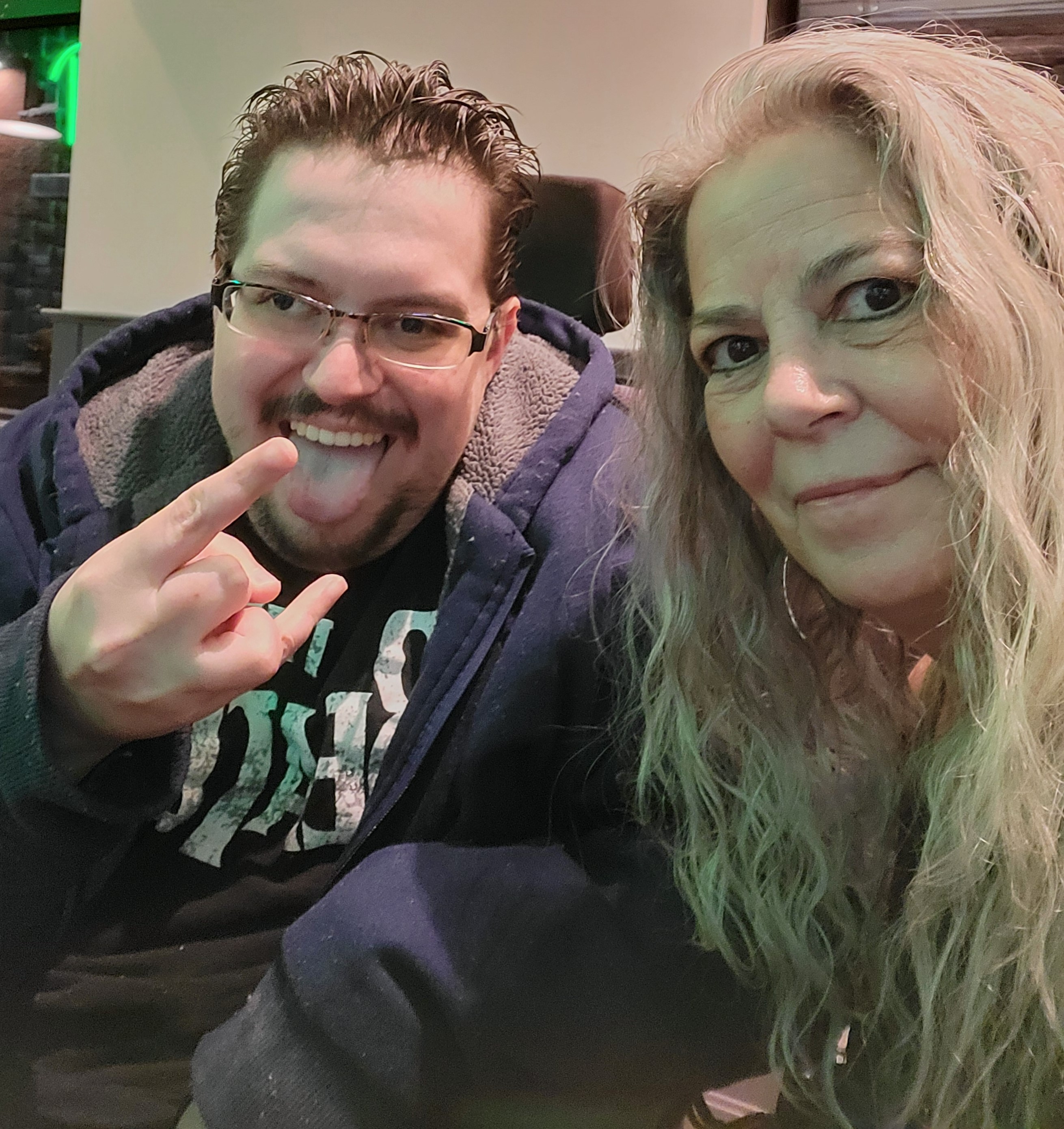
Ian Murawski and his mother, Rachel Surner
Following an almost identical incident in January of this year in which the same staff member again neglected to give Ian his urinal, Rachel said JRI’s response was to blame her for allegedly being “disruptive” in the home.
JRI then imposed severe restrictions on her visits to her son, and DDS stated that she and her husband would either have to comply with those restrictions or remove Ian from the home.
Rachel and her family chose the latter course. They took Ian home last month to live with them.
They are seeking another placement, and are interested in the Wrentham Developmental Center or possibly a state-operated group home. But, Rachel said, DDS has provided few answers to their questions about those options.
As we argue below, we believe that in issuing the visitation restrictions, JRI violated DDS regulations ensuring a right to visitation. Also, we think DDS violated its transfer regulations that prevent the termination of residential services to individuals without due notice and due process.
This is one of many cases in which providers and DDS appear to have placed the blame on family members for being disruptive or overly demanding when they have attempted to advocate for their loved ones in group home settings. (See here, here, and here.) In all of these cases, DDS has appeared to side with provider staff against the families when those families are simply complaining about substandard care.
‘Passive-aggressive torture”
Rachel and her husband, who deny having ever caused a disturbance in the home, said the latest incident in January occurred after her son had called her repeatedly, screaming and “in crisis.”
Ian, who is high-functioning despite his disability, takes medication for extreme anxiety and depression, which can reach levels high enough to cause psychosis, Rachel said. However, the staff didn’t give the medication to Ian regularly because they didn’t pay enough attention to him to recognize his symptoms of anxiety, she said.
According to a DDS complaint intake letter about the January 21 incident, Rachel went to the house from her home in Holliston at 11:30 p.m. after being unable to reach the staff by phone. A JRI attendant on call, whom she also had contacted, had told her that Ian was asleep. Rachel said she knew this wasn’t the case as Ian was still calling and texting her in distress.
When she entered the house, she found that Ian was awake in his bed, which had been left in an upright position. He had no remote controls for adjusting the bed, no urinal, no water, and the overhead light had been left on. Without access to the remote controls, there was no way Ian could adjust his bed or get to sleep.
According to the intake letter, a staff member, meanwhile, was lying under covers with a pillow on a couch in the living room, and was speaking on a phone in a foreign language. When Rachel asked repeatedly where the remote controls were, the staff member refused to answer and said he was on a call. At that time, Rachel pulled her phone out of her back pocket to call her daughter, and the staff person then lunged at her to grab it from her, the intake letter stated.
This was the same staff member, according to Rachel, who had neglected in the previous incident in June 2022 to give Ian his urinal. The January 2024 intake letter quoted Rachel as referring to the failure to give Ian his remote controls and urinal as “a passive-aggressive form of torture.”
The latest incident is under investigation by the Disabled Persons Protection Commission (DPPC).
June 2022 incident
As we reported last April, Ian repeatedly texted Rachel early one morning in June 2022 from the group home that he needed to urinate, but couldn’t locate his portable urinal.
Rachel said she tried to call the house, but the phone was off the hook; so at 6:45 a.m. on a Sunday morning, she drove there. As she waited for someone to answer the door, she could hear Ian crying for help.
Rachel said the same staff member, who later neglected to provide Ian with his urinal and remote controls in January of this year, came to the front door, but refused at first to let her in. She went past him into the house, and went to her son’s room where she saw that his urinal, which was supposed to be on his bedside table, was on the floor.
Rachel said that when she then tried to leave the room to give Ian privacy, the staff member initially blocked the door to the bedroom and wouldn’t move to let her out. He later moved away slightly, but she felt threatened and intimidated by his actions.
She said she later asked the staff member why he didn’t respond to Ian’s plea for help, to which he replied that Ian “’never told us he needed help.’” She said she replied to the staff member that she could hear Ian’s cries for help while she was standing at front door.
Problems not corrected
Rachel said neither JRI nor DDS made efforts to correct problems in the group home, such as the urinal incidents, that she brought to their attention. One other example of that was her discovery in July of 2023, after bringing Ian home from a musical gig at a restaurant in Ashland, that overnight staff in the home appeared to be asleep in the living room when they arrived. As noted above, she said that issue continued through this past January.
Other ongoing problems have included:
Hygiene neglect
Rachel said Ian went for days with no shower or toileting in the group home. He also went for days without having his teeth brushed. His bed linens filthy, she said, and he was often dressed in same clothing as the day before. His finger and toenails were often unclipped, and he was often not shaved.
Lack of socialization, activities, and community involvement
Rachel contends the staff rarely took Ian out of the house on community outings. She said this was due to the staff’s lack of involvement in general with him. She noted that Ian needed far more care than the other clients in the home who are all able-bodied.
Visitation restrictions violated DDS regulations
Rachel said that after the incident on January 21 of this year, JRI’s response was to issue visitation restrictions against her, which both she and a JRI program director were supposed to sign.
A copy of the unsigned and undated visitation restrictions contains the introductory statement that, “Inappropriate and disruptive behavior creating an environment detrimental to program services have occurred during visits of Rachel Surner to (the group home).”
Rachel maintains that statement is completely untrue. She maintains that neither she nor any other members of her family were ever disruptive in the home.
Rachel was then supposed to agree to the following restrictions:
- Visits may occur no more than once per day for a maximum of one hour per visit.
- No video recording of staff or other individuals may take place during the visit. (Rachel maintains she never recorded staff, but live videotaped her visits so family members could be witnesses to interactions in the home.)
- Drop-offs without entering the home or property must also be scheduled in advance with JRI management and are limited to 10 minutes.
- Parking on the street outside the property is prohibited except during agreed-upon visits.
- JRI may deny plans for any visit if it is not deemed necessary or it is detrimental to the program.
- JRI staff have the right to terminate a visit at any time. I (Rachel) agree to leave peacefully when requested or required to do so.
Rachel said the DDS assistant area director stated to her that she would have to agree to the restrictions in order for Ian to continue to live in the group home.
In our view, JRI, in issuing the visitation restrictions, was acting in violation of DDS regulations, which permit visitation by a guardian “to the maximum extent possible.” According to the regulations, “Reasonable restrictions” may be placed on the visits “to avoid serious disruptions in the normal functioning of the provider.”
Given that Rachel denies that her family ever caused any disruptions, we think DDS should have given the Surners a chance to rebut the allegation. That didn’t happen.
We also think DDS violated the Department’s transfer regulations, which prohibit the Department from terminating a residential placement without giving 45 days’ notice, specifying an alternative location and obtaining the guardian’s consent to it.
Desire for a new placement
Rachel said that since Ian’s discharge from the group home, he is not currently receiving any services from the Department. She said that while DDS did provide her with a list of other group homes, the Department has not answered many of her questions about the list.
This case is one of many demonstrating that the DDS-funded provider-run residential system has become dysfunctional. Problems identified by family members are not corrected, but the family members themselves often become the focus of blame.
DDS has consistently also blamed these problems on staffing shortages. But that doesn’t explain why the Department apparently didn’t act in this case to ensure that overnight staff were not sleeping on the job, or that the staff treated Ian with dignity and respect. Repeated failures to provide a portable urinal to a person with quadriplegia is inexcusable, and is rightly being investigated as abuse by DPPC.
Inadequate staffing also doesn’t explain why the Department would agree to an excessively restrictive visitation policy against the family, or why the Department didn’t seek Rachel’s response to the charge that she was being disruptive in the home.
DDS needs to reexamine and change its culture. In our view, this is a key test for the Healey administration.
 COFAR blog