Mother says neglect and intimidation continued at her son’s group home
More than a year and a half ago, Rachel Surner informed the upper management of her son’s group home in Ashland of a disturbing incident in which the staff neglected to give her son, Ian Murawski, his portable urinal.
Rachel had to come to the house herself at 6:45 in the morning in June 2022 to retrieve the urinal, which was on the floor next to Ian’s bed. She said she was met at the door with resistance and intimidation by a staff member on duty.
Ian, 31, has spastic quadriplegia, a condition that has left him with the limited ability to move only his arms. Despite that, Ian, who has an intellectual disability, is an engaging young man with a major musical singing talent.
Rachel also informed the Department of Developmental Services (DDS) about the June 2022 incident, and a range of other problems in the group home, which is run by the Justice Resource Institute (JRI), a corporate DDS provider. But nothing was ever done to improve the situation, she said.
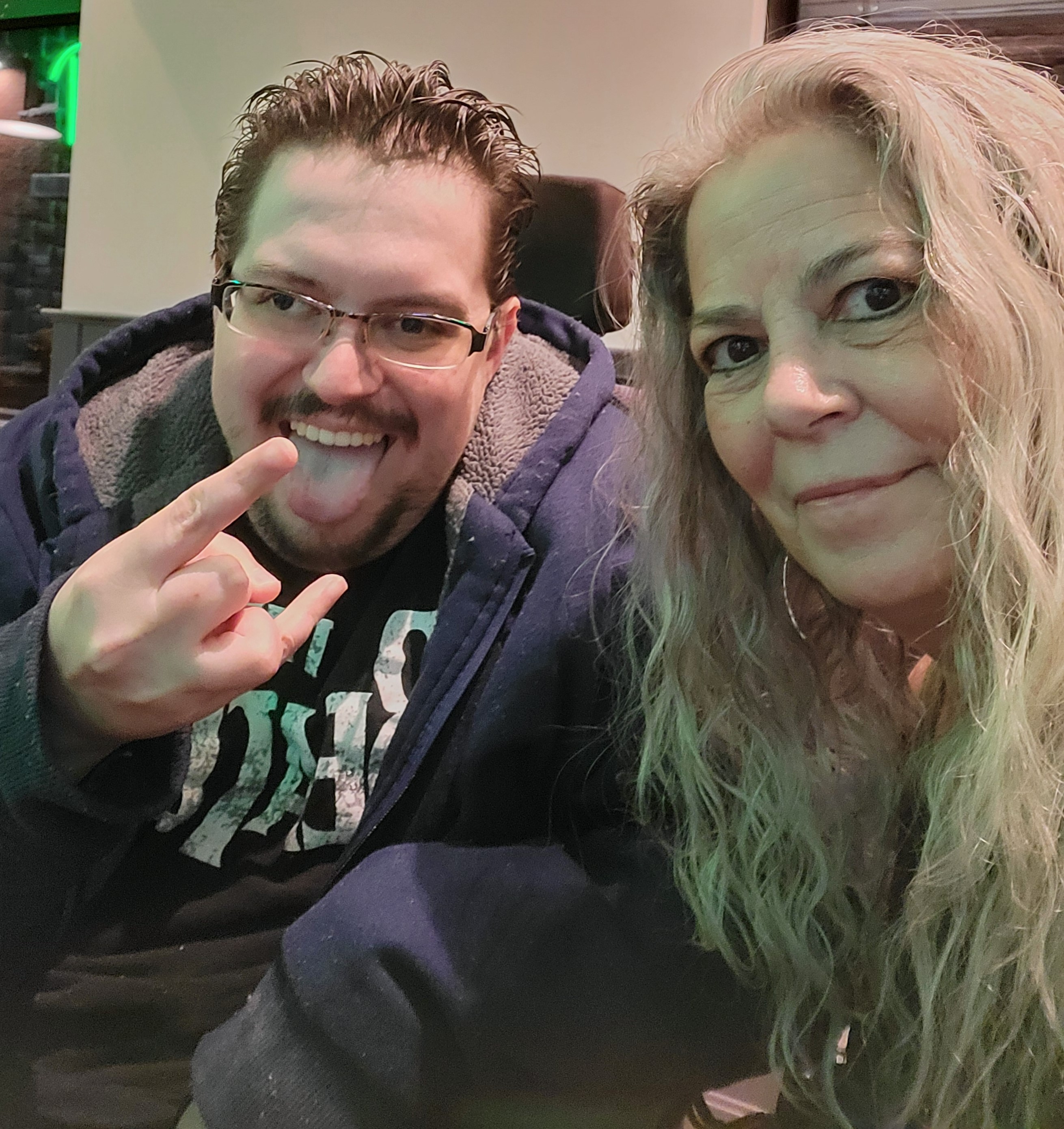
Ian Murawski and his mother, Rachel Surner
Following an almost identical incident in January of this year in which the same staff member again neglected to give Ian his urinal, Rachel said JRI’s response was to blame her for allegedly being “disruptive” in the home.
JRI then imposed severe restrictions on her visits to her son, and DDS stated that she and her husband would either have to comply with those restrictions or remove Ian from the home.
Rachel and her family chose the latter course. They took Ian home last month to live with them.
They are seeking another placement, and are interested in the Wrentham Developmental Center or possibly a state-operated group home. But, Rachel said, DDS has provided few answers to their questions about those options.
As we argue below, we believe that in issuing the visitation restrictions, JRI violated DDS regulations ensuring a right to visitation. Also, we think DDS violated its transfer regulations that prevent the termination of residential services to individuals without due notice and due process.
This is one of many cases in which providers and DDS appear to have placed the blame on family members for being disruptive or overly demanding when they have attempted to advocate for their loved ones in group home settings. (See here, here, and here.) In all of these cases, DDS has appeared to side with provider staff against the families when those families are simply complaining about substandard care.
‘Passive-aggressive torture”
Rachel and her husband, who deny having ever caused a disturbance in the home, said the latest incident in January occurred after her son had called her repeatedly, screaming and “in crisis.”
Ian, who is high-functioning despite his disability, takes medication for extreme anxiety and depression, which can reach levels high enough to cause psychosis, Rachel said. However, the staff didn’t give the medication to Ian regularly because they didn’t pay enough attention to him to recognize his symptoms of anxiety, she said.
According to a DDS complaint intake letter about the January 21 incident, Rachel went to the house from her home in Holliston at 11:30 p.m. after being unable to reach the staff by phone. A JRI attendant on call, whom she also had contacted, had told her that Ian was asleep. Rachel said she knew this wasn’t the case as Ian was still calling and texting her in distress.
When she entered the house, she found that Ian was awake in his bed, which had been left in an upright position. He had no remote controls for adjusting the bed, no urinal, no water, and the overhead light had been left on. Without access to the remote controls, there was no way Ian could adjust his bed or get to sleep.
According to the intake letter, a staff member, meanwhile, was lying under covers with a pillow on a couch in the living room, and was speaking on a phone in a foreign language. When Rachel asked repeatedly where the remote controls were, the staff member refused to answer and said he was on a call. At that time, Rachel pulled her phone out of her back pocket to call her daughter, and the staff person then lunged at her to grab it from her, the intake letter stated.
This was the same staff member, according to Rachel, who had neglected in the previous incident in June 2022 to give Ian his urinal. The January 2024 intake letter quoted Rachel as referring to the failure to give Ian his remote controls and urinal as “a passive-aggressive form of torture.”
The latest incident is under investigation by the Disabled Persons Protection Commission (DPPC).
June 2022 incident
As we reported last April, Ian repeatedly texted Rachel early one morning in June 2022 from the group home that he needed to urinate, but couldn’t locate his portable urinal.
Rachel said she tried to call the house, but the phone was off the hook; so at 6:45 a.m. on a Sunday morning, she drove there. As she waited for someone to answer the door, she could hear Ian crying for help.
Rachel said the same staff member, who later neglected to provide Ian with his urinal and remote controls in January of this year, came to the front door, but refused at first to let her in. She went past him into the house, and went to her son’s room where she saw that his urinal, which was supposed to be on his bedside table, was on the floor.
Rachel said that when she then tried to leave the room to give Ian privacy, the staff member initially blocked the door to the bedroom and wouldn’t move to let her out. He later moved away slightly, but she felt threatened and intimidated by his actions.
She said she later asked the staff member why he didn’t respond to Ian’s plea for help, to which he replied that Ian “’never told us he needed help.’” She said she replied to the staff member that she could hear Ian’s cries for help while she was standing at front door.
Problems not corrected
Rachel said neither JRI nor DDS made efforts to correct problems in the group home, such as the urinal incidents, that she brought to their attention. One other example of that was her discovery in July of 2023, after bringing Ian home from a musical gig at a restaurant in Ashland, that overnight staff in the home appeared to be asleep in the living room when they arrived. As noted above, she said that issue continued through this past January.
Other ongoing problems have included:
Hygiene neglect
Rachel said Ian went for days with no shower or toileting in the group home. He also went for days without having his teeth brushed. His bed linens filthy, she said, and he was often dressed in same clothing as the day before. His finger and toenails were often unclipped, and he was often not shaved.
Lack of socialization, activities, and community involvement
Rachel contends the staff rarely took Ian out of the house on community outings. She said this was due to the staff’s lack of involvement in general with him. She noted that Ian needed far more care than the other clients in the home who are all able-bodied.
Visitation restrictions violated DDS regulations
Rachel said that after the incident on January 21 of this year, JRI’s response was to issue visitation restrictions against her, which both she and a JRI program director were supposed to sign.
A copy of the unsigned and undated visitation restrictions contains the introductory statement that, “Inappropriate and disruptive behavior creating an environment detrimental to program services have occurred during visits of Rachel Surner to (the group home).”
Rachel maintains that statement is completely untrue. She maintains that neither she nor any other members of her family were ever disruptive in the home.
Rachel was then supposed to agree to the following restrictions:
- Visits may occur no more than once per day for a maximum of one hour per visit.
- No video recording of staff or other individuals may take place during the visit. (Rachel maintains she never recorded staff, but live videotaped her visits so family members could be witnesses to interactions in the home.)
- Drop-offs without entering the home or property must also be scheduled in advance with JRI management and are limited to 10 minutes.
- Parking on the street outside the property is prohibited except during agreed-upon visits.
- JRI may deny plans for any visit if it is not deemed necessary or it is detrimental to the program.
- JRI staff have the right to terminate a visit at any time. I (Rachel) agree to leave peacefully when requested or required to do so.
Rachel said the DDS assistant area director stated to her that she would have to agree to the restrictions in order for Ian to continue to live in the group home.
In our view, JRI, in issuing the visitation restrictions, was acting in violation of DDS regulations, which permit visitation by a guardian “to the maximum extent possible.” According to the regulations, “Reasonable restrictions” may be placed on the visits “to avoid serious disruptions in the normal functioning of the provider.”
Given that Rachel denies that her family ever caused any disruptions, we think DDS should have given the Surners a chance to rebut the allegation. That didn’t happen.
We also think DDS violated the Department’s transfer regulations, which prohibit the Department from terminating a residential placement without giving 45 days’ notice, specifying an alternative location and obtaining the guardian’s consent to it.
Desire for a new placement
Rachel said that since Ian’s discharge from the group home, he is not currently receiving any services from the Department. She said that while DDS did provide her with a list of other group homes, the Department has not answered many of her questions about the list.
This case is one of many demonstrating that the DDS-funded provider-run residential system has become dysfunctional. Problems identified by family members are not corrected, but the family members themselves often become the focus of blame.
DDS has consistently also blamed these problems on staffing shortages. But that doesn’t explain why the Department apparently didn’t act in this case to ensure that overnight staff were not sleeping on the job, or that the staff treated Ian with dignity and respect. Repeated failures to provide a portable urinal to a person with quadriplegia is inexcusable, and is rightly being investigated as abuse by DPPC.
Inadequate staffing also doesn’t explain why the Department would agree to an excessively restrictive visitation policy against the family, or why the Department didn’t seek Rachel’s response to the charge that she was being disruptive in the home.
DDS needs to reexamine and change its culture. In our view, this is a key test for the Healey administration.
 COFAR blog
DDS culture, for sure, needs to change. We had a pre-hearing conference for our daughter’s eligibility appeal. We have already been through informal conference with DDS.
Note: We already have counsel for our negotiations with Salem Public Schools. We can not afford additional counsel focused on our issues with DDS. So it was just my husband and I in attendence as Appellants.
This was a review of exhibits and questions before the “Fair” Hearing in March. There were 4 - Count ’em, 4. – DDS lawyers that tried to sit in on that call.
I was asked if I minded if that 3 of them were observing. I did. They were booted, but I’m sure they’ll review the recording later.
To get services out of DDS (and the majority of public schools), families need to be able to afford attorneys. This is not feasible for most, and DDS knows it. So they can continue to abuse families like Ian’s and Rachel’s.
The watchdog agencies within Massachusetts seem to be intentionally underfunded and, often, government-captured anyway. I have talked with a lot of acronyms over the past year.
Massachusetts has gone horribly wrong somewhere.
LikeLiked by 1 person
Happening to me since February, for no reason. Different agency, but same story as this family.
I did not make any waves, and the residential director was optimistic that things would go back to the way it was before. My main focus was that my child was safe and happy.
However, Sunday, while waiting in the car to have staff bring my 33, non verbal child, she saw me through the window and came outside. It took almost 7 minutes for the 2 staff to realize she was missing, even though I called as I always do to let them know I was 6-8 minutes away.
This could have ended up very badly, for my daughter will go with anyone who smiles.
This could have been avoided if I were able to go inside of the house to pick her up.
Has this happened before, I wonder.
God protect her.
LikeLiked by 2 people
Why do staff not let you inside to get your adult child? Isn’t that illegal or, at least, contrary to HCBS guidelines?
LikeLike
Wrentham Developmental Center would be an excellent choice for this family. Wrentham runs activities all day and also in the evenings. They have allied health services and on-site medical care. Ian would love it, and Rachel would be allowed to visit at any time. He could also visit her at home at any time. Even though Wrentham is considered a more restrictive placement, he would have way more freedom and choices than at a community-based placement. When I went on my tour, I saw wheelchair bound individuals enjoying wheelchair square dancing. This is something you would never see at a community-based placement. The problem is that the DDS will do just about anything to keep out new admissions. I have been trying to get my son admitted for over a year with no luck so far. Others are trying to get in as well. Here is a link to an article I wrote about Wrentham: Why health care professionals must back full care continuum for autism and intellectual disabilities (kevinmd.com)
LikeLiked by 1 person
This is such bullshit and undermining a kind. and excuse me true real American who sings and loves his country! I work for a nonprofit and we try our best but if the government doesn’t help unfortunately we are screwed! Thank God people like him are the future with us!
LikeLike
This story is disgusting and there are unfortunately so many stories like this. DDS is abusive and militant towards every one. They break laws, do what they want (and they are mean people) with impunity. They forgot who they serve. Evidently, the zoom meetings we had with Senator Robyn K. Kennedy and House Member Jay D. Livingstone to bring to their attention the problems with DDS were futile. First off Ian should be in Wrentham Developmental Center where he will get the care he needs instead of a group home who is clearly incompetent. Yet DDS isn’t referring anyone to Wrentham and families have been waiting for more than a year for their child to be sent there.
LikeLiked by 1 person
We have to go back to visit Kennedy and Livingstone again. They probably think that they listened to us and let us vent & that’s enough. We need to follow up and tell them that this is real.
LikeLiked by 2 people
Kennedy and Livingston are chairmen on the committee for The Joint Committee on Children, Families and persons with disability, this should be a priority. That Kennedy and Livingston never got back to us tells me a lot. It’s like no one will approach the untouchable DDS. These people need be made accountable for their horrific actions.
LikeLiked by 2 people
This story is outrages and there are too many of these stories of DDS’s heavy hand and power they abuse. They have become an enemy to the disabled community and continue their militant actions to the people they serve and pay their paychecks. This gentleman, Ian should be in Wrentham Developmental Services because it’s clear this group home is incompetent to car for his needs. But DDS continues to refuse to refer people to Wrentham while they have opening s and is highly rated, all contrary to what the Federal Law states. DDS abuses their power, ignores laws with impunity. It appears the zoom meetings with Senator Robyn K. Kennedy and House Member Jay D. Livingston, both chairmen of The Joint Committee on Children, Families and Persons with Disabilities to enlighten them of DDS’s behavior was futile. DDS have a bunch of mean and thugs people working there. Drunk with power and steam roll over everyone. When is someone going to do something?
LikeLiked by 2 people
This might bother some people but here! Do you realize this push for state ran group homes may be a lost cause by this point?! What is needed is private non profit ICF with trained and vetted staff. Not for profit group homes of any kind. Maybe a trip to Israel to learn how non profits like AKIM and ALUT work. These are two Israeli organizations that care for the seriously disabled. These organizations use trained and vetted foreign and local volunteers to the benefit of the seriously disabled participants. Some of the volunteers at ALUT and AKIM are non-draftees to the IDF and this volunteer work is their national service in lieu of military service. We need this system here to care for the disabled. Americorps has few disabled related programs sadly.
LikeLike
I think we all realize that the fight to keep state-operated intermediate care facilities and state-operated group home as a viable option for folks in Massachusetts is an uphill battle. However, if we can keep these open and viable, the corporate community providers will have to compete with them. There is no law that can be passed, no amount of money that the legislature can provide, no policies that can be implemented that will do as much as competition from quality services. That’s why we continue to fight, and we won’t give up ever- no matter how bad the situation looks. Having said that, Israel’s national service is unique & is something that deserves looking into for our population.
LikeLike