Archive
Families concerned they will be prevented from visiting loved ones at Christmas after having been barred on Thanksgiving
A nonprofit organization that was appointed as the guardian of at least two developmentally disabled individuals has imposed what appear to be illegal restrictions on visits to them from their families.
In each case, an employee of the corporate guardian, TLC Trust, Inc., appears to have been involved in preventing the families of Ryan Moran and Naomy Alicea from visiting them on Thanksgiving Day last month.
And in each case, Ryan’s and Naomy’s parents are concerned they will similarly be barred from visiting them in their Worcester-based group homes over the upcoming Christmas holidays.
The family members maintain in each case that the visitation restrictions have resulted from their complaints that their loved ones have been subjected to abuse or neglect in their provider-operated residences.
Naomy, 37, has an intellectual disability (ID) and cerebral palsy. Ryan, 29, has ID and is on the autism spectrum.
Hilda Natal, Ryan’s mother, said that the Department of Developmental Services (DDS) had Ryan placed in a group home run by Venture Community Services in 2020, when he was 24.
Naomy has been living in a separate group home in Worcester, which is operated by the Seven Hills Foundation. Both Venture and Seven Hills are DDS-funded residential providers.
Members of both families contend that their guardianships of their loved ones were removed for questionable reasons. DDS successfully petitioned in Worcester Probate Court to have TLC Trust appointed as the guardian of each individual instead.
It is unclear why TLC has been appointed as guardian of these clients. TLC’s website states that the organization primarily administers trusts with a minimum value of $100,000 for persons with developmental and other disabilities.
While the TLC website says the organization can also act as a corporate guardian for persons, the website further states that, “First priority for this (guardianship) service will be given to those individuals who have a trust relationship with the organization.” It does not appear that any such trust account with TLC exists in either Ryan’s or Naomy’s case.
We believe the visitation restrictions violate DDS regulations, which state that DDS clients have the “right to be visited and to visit others under circumstances that are conducive to friendships and relationships.” Also, the individual’s family members “shall be permitted to visit at all times, unless the individual objects…”
Visitation restrictions correlate with allegations of abuse or neglect
In both cases, the visitation restrictions appear to have followed from allegations by the families of neglect or abuse by the staff.
In each case, DDS and the corporate guardian appear to have blamed the families for causing problems such as allegedly causing agitation in their loved ones after their visits. But while clients may well become agitated, especially at the end of a visit, the cause of that agitation may actually be that the family member is leaving the client alone with the staff.
If there is neglect or abuse by the staff, that can be sufficient reason for a client to become agitated when the family member leaves.
Commissioner’s help sought in allowing visits
On November 25, I wrote to DDS Commissioner Sarah Peterson to urge that DDS allow Ryan’s family to visit him on Thanksgiving Day. Since then, we learned that a similar prohibition on visits was imposed on Naomy’s parents, and that TLC and its employee, Diane Parker, were involved in each case in imposing the restrictions.
As noted, neither family was allowed to visit on Thanksgiving. We are urging the Department to allow family visits during the Christmas and New Year’s holidays and to review the actions of TLC in restricting family visitation in each case.
Last week, Commissioner Peterson responded, thanking me for “reaching out with (my) concerns,” and saying she had “followed up with the local teams on the specifics of these cases. While I know you understand that I cannot comment on specific cases, please be assured that they are engaged and will follow up,” she wrote.
Peterson added that, “In terms of TLC Trust, Inc. serving as a guardian, I cannot speak to their requirements for taking private pay cases (which you identified from their website), but I can tell you that TLC Trust qualified through state procurement procedures to receive and accept appointments from DDS.”
Naomy’s case
Lizvette Rivera, Naomy’s mother, said she lost her guardianship of Naomy after a former family acquaintance made several accusations against Lizvette in 2018, which Lizvette and her other daughter, Catiria, claim were false.
DDS petitioned in Worcester Probate Court in 2018 to remove Lizvette as guardian and install TLC. Lizvette said her removal was based on the false accusations made against her, which were nevertheless presented as true in a Guardian ad Litem report to the Probate Court in 2019.
Lizvette and Catiria alleged numerous health scares at Naomy’s group home. They said that in one case, Naomy developed a urinary infection that required hospitalization because she was forced to shower by herself even though her family had repeatedly said she required support.
Naomy was subsequently prescribed medication that Lizvette and Catiria claim negatively altered her behavior. But when they questioned this, the residential staff imposed further visitation restrictions on them. They said they are frustrated by their inability to receive health information about Naomy from medical professionals, especially in light of her health complications.
Ryan’s case
Ryan’s mother and father, Hilda Natal and Jose Moran, said they have been barred from visiting him since early October because their visits were allegedly causing him emotional distress. As noted above, we strongly question whether it was the case that their visits could have caused that.
Jose said that on Thanksgiving day, he and Hilda tried to visit their son, but that the group home manager called Parker, the TLC Trust employee, who said visits were not being allowed by a DDS attorney. The house manager then threatened to call the police, and Hilda and Jose left.
Phone taken
Jose said that the group home staff also recently confiscated Ryan’s cell phone, with which he had been communicating with his parents on FaceTime. Jose said a staff member told him the phone was being kept in the group home office because the phone was not working. But Jose questions that because the phone is new. Without the cell phone, Ryan’s parents are only able to communicate with him via the group home’s landline phone in the office.
Hilda also said that when Ryan did have his phone, group home staff would stand outside his room, listening to his conversations. She said that in October, the house manager said Ryan would be required to leave his bedroom door open when he talked to his parents on his phone.
The DDS regulations cited above state that clients have the right to have reasonable access to a telephone other web-based communication, and the right “to make and receive confidential communications.” They also have the right “to keep and use personal possessions.”
Judge blames parents, but provides few details
In Ryan’s case, a probate court judge appears to have sided with DDS and TLC in finding that his parents’ visits to him were “problematic.” In a December 9, 2024, document titled, “Brief Findings and Rationale,” Worcester Probate Court Judge Roxann Tetreau stated that “visits with (Ryan’s) parents at the group home …would result in (Ryan) engaging in behaviors after they left.” As a result, the judge said, the group home and TLC restricted family visits.
Tetreau’s findings, however, provided no supporting details. The judge did state that: “It is again clear from the evidence that Jose and Hilda love their son…They do not, however, understand what (Ryan) needs…” The judge appears, however, to have accepted DDS’s and TLC’s claims about Ryan’s parents and to have disregarded the parents’ point of view.
Abuse and neglect of Ryan
There was also no mention in Tetreau’s findings of Hilda’s allegation that Ryan was repeatedly abused by staff in a day program job he had, starting in 2017. She said the abuse caused Ryan to have an anxiety crisis, and she then told him to stop working there. After that, she said, DDS petitioned in probate court to remove her as Ryan’s guardian. She said DDS made false statements in court about her and Ryan.
Neglect and restrictions on visits
Neglect and severe restrictions on family visitation imposed by group home providers seem to go together, and we have brought several of those cases to the attention of Commissioner Peterson in recent months.
When there is neglect and family members complain, the instinct of providers and DDS is often to deny families access to their loved ones in their residences. That way, the neglect itself does not have to be addressed.
We are asking that DDS investigate the allegations of abuse or neglect in each of these cases and to work with the families to find more suitable residential settings.
In the meantime, we are urging Commissioner Peterson to ensure that both of these families are allowed to visit their loved ones over the Christmas and New Year’s holidays.
Support COFAR this Holiday Season
Dear Members and Friends of COFAR,
Thank you for your dedication to the most vulnerable among us with intellectual and developmental disabilities. As we approach the holidays, we want to share our latest work and ask for your ongoing support.
We are continuing to advocate for families and guardians of clients in the Department of Developmental Services (DDS) system, as well as those caught up in the probate court system. We talk to people every day who feel overwhelmed by their treatment by DDS and the courts.
Whether it is attending court hearings as advocates on behalf of family members and guardians or enlisting the help of pro bono attorneys to assist them, we are committed to ensuring their voices are heard.
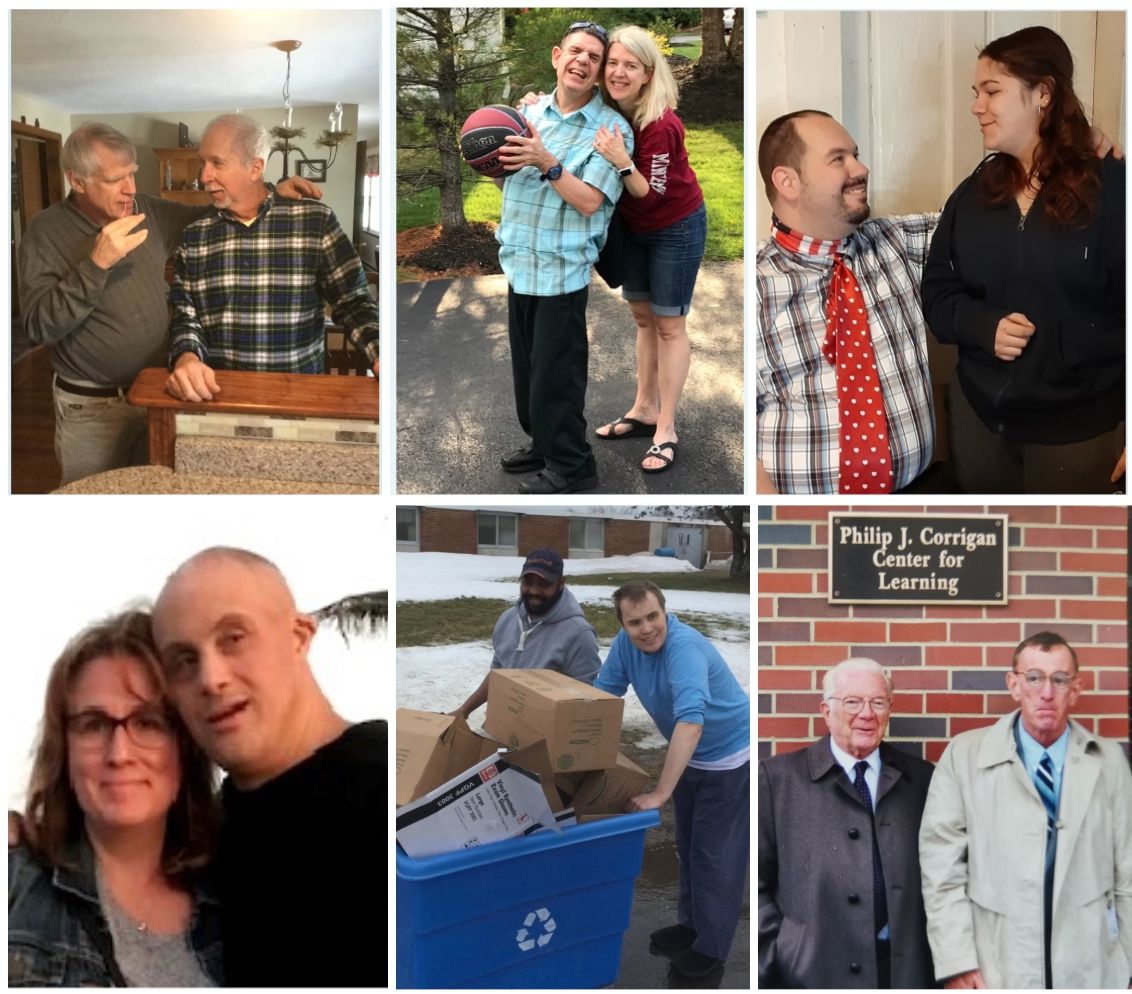
We are also deepening our outreach to legislators in opposition to bills that would replace guardianship with Supported Decision-Making (SDM), possibly marginalizing family members in the decisions most impacting their loved ones.
And we are working to enlist the aid of legislators and others in our effort to protect our state’s two remaining congregate care facilities—the Wrentham Developmental Center and the Hogan Regional Center. As you know, these centers are under siege by the administration and other proponents of privatized care who fail to recognize that the facilities provide a critical backstop for the care of persons around the state with the most profound levels of intellectual disability and the most serious medical issues.
We are further committed to the preservation and adequate funding of the state’s network of DDS-run group homes as an additional option for families and guardians seeking residential placements for their loved ones. After all, it is imperative that individuals and their families can choose the placements that best align with their needs.
Via our blog site, we provide unparalleled scrutiny of those and other issues, such as excessive compensation paid to provider executives and underpayment of direct-care staff.
Please consider a donation of whatever amount you can afford to help us continue advocating for you. You can contribute by going to our website at www.cofar.org and by clicking on the donate link. Or, you can send a check to our address (12 North Street, Leominster, MA 01453).
Thank you, and happy holidays!
Sincerely,
Thomas J. Frain, Esq.
President
 COFAR blog