Archive
DDS and group home deny responsibility for month-long family hospital visitation ban
The Department of Developmental Services (DDS) and a department-funded group home provider are denying responsibility for having blocked a group home resident’s family from visiting him at Brigham and Women’s Hospital for more than a month, starting in January.
The hospital is not commenting on the matter and has been unresponsive to numerous attempts by COFAR to inquire on behalf of the family about the justification for the blocked visitation. The hospital has even declined to clarify its general visitation policies.
Meanwhile, the resident’s DDS-funded guardian and the Seven Hills Foundation, the group home provider, appear to be continuing to impose restrictions on family visits to the group home. Those restrictions appear to violate DDS regulations.
As we previously reported, the family of Giovanny Arias, an individual with autism spectrum disorder and other conditions, was prevented from visiting him in the hospital where he was taken after having reportedly fallen down the stairs of his group home on December 19. He suffered injuries, including a broken wrist, black eye, and numerous bruises throughout his body.
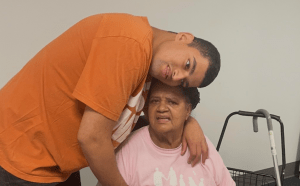
Giovanny Arias and his grandmother, Liduvina Gonzalez
Due to the visitation restrictions, the family was deprived of information about Giovanny’s well-being and whereabouts for over a month while he underwent numerous surgical operations, his great aunt, Carolina Hernandez Broomhead, said.
The ban on visiting Giovanny in the hospital followed growing communication and visitation restrictions imposed by Seven Hills management and Giovanny’s state-paid guardian, Susan Braus, in the group home, Carolina said. Carolina contended the restrictions started after the family expressed concerns about insufficient care at the group home.
Visitation restrictions appear to be a part of a pattern in which families are marginalized when they attempt to advocate for their loved ones (see here, here, here).
Previous visitation restrictions at the residence
Issues involving visitation restrictions in Giovanny’s group home first arose this past fall. Carolina contended that Seven Hills and the guardian had responded with visitation restrictions against the family for having alleged that the group home was subjecting Giovanny to poor hygiene and overmedication, and had depleted his Social Security funds. Seven Hills also prevented Giovanny’s grandmother from seeing her grandson at the residence, and, at one point, even called the police on the seventy-eight-year-old woman, Carolina said.
Moreover, in November, Seven Hills proposed a series of new restrictions that included a ban on family visits to the residence. Family visits would have to occur at other predetermined locations. There would also be a maximum of two family visits per month with a limit of two hours per visit. Additionally, the family would be required to bring a translator with them on all visits for the benefit of staff who are unable to speak Spanish. A fuller discussion of the restrictions is available here.
Withheld medical updates on the evening of the hospitalization
Existing tension surrounding mistreatment and visitation limitations appeared to escalate during Giovanny’s hospitalization, starting on December 19, at Brigham and Women’s Hospital.
That night, Carolina said, she participated in a three-way phone call with a doctor and Braus. She said she heard Braus direct hospital personnel to withhold medical information from the family, even as a doctor recommended otherwise. Consequently, the family was denied vital information about Giovanny’s welfare amid a health emergency, she said.
Family hospital visitation restrictions
Hospital visitation restrictions soon ensued after Giovanny’s admission. While the family was permitted to visit Giovanny at the hospital on December 31, visitation was suddenly restricted on January 2, Carolina said. That day, two security officers unexpectedly ushered another aunt out of the hospital after she attempted to visit Giovanny. Carolina said they did not provide any explanation for the aunt’s removal.
Family difficulties accessing information about hospital visitation restrictions
Shortly afterwards, Carolina called the hospital for more information on the incident. She said a Brigham and Women’s employee claimed to her that Braus had submitted written documentation barring family visits. Carolina said that when she followed up with Braus, however, Braus claimed the hospital was responsible for the visitation ban.
Other attempts by the family to receive clarification of the visitation restrictions in the hospital have been futile, according to Carolina. In an email dated January 13, DDS area director Jeffrey Hetrick claimed that neither DDS nor the guardian had a say in the restrictions, and placed responsibility on the hospital.
Seven Hills Area Director Caelin Scribner similarly asserted that Seven Hills was uninvolved in the decision-making process on visitation, and maintained the hospital alone made the decision to deny family visits. In their emails, both DDS and Scribner encouraged the family to contact the hospital for clarification. Yet, further family outreach to the hospital was unsuccessful, Carolina said, with the hospital hanging up the phone and not responding to emails.
COFAR difficulties assessing responsibility for hospital visitation restrictions
COFAR also experienced similar challenges while investigating the situation. Neither Braus nor Scribner replied to our emails requesting clarification on the hospital visitation restrictions. We emailed DDS Commissioner Sarah Peterson on January 8 to express concerns about the family hospital ban and were told that the DDS Area Office staff would follow up with the family directly. We reached out again on January 26 to the commissioner to highlight that the issue remained and have yet to receive a response.

Giovanny’s broken wrist, which the provider claims he suffered after falling in the group home in December.
Communication with the hospital has proven difficult as well. Despite having a seven-day response timeframe, the hospital didn’t respond to three of our emails about the restrictions. The Brigham and Women’s Patient and Family Relations Department finally replied to us in a January 26 email, stating we would need “a release of information signed by someone who has the authority to speak for the patient.”
While laws protecting health information may limit the public’s ability to receive case details, even our request for basic clarification on hospital visitation policies was not answered by the hospital.
On January 26, I called the floor where Giovanny was hospitalized and was told by a hospital staff member that they could not give me any information and that I would need to speak with Braus instead.
When I clarified that I simply had general questions about the hospital visitation policy, the staff member offered to connect me with a supervisor. After leaving me on hold for about twenty minutes, the staff member returned and said I would have to contact the Patient and Family Relations Department. When I asked if I could speak to the supervisor, the staff member responded that they did not have that person’s contact information.
Implications of the family hospital visitation restrictions
Regardless of who initiated the hospital restrictions, it is concerning that all parties have disclaimed responsibility rather than working to resolve the problem. Each entity has a duty to promote Giovanny’s best interest in partnership with the others.
Isolating an individual with disabilities from his family for over a month cannot be said to advance his best interest. For a person with autism who has limited abilities to communicate with speech, the disruption of routine and exposure to an overwhelming sensory environment in isolation could be traumatic.
The hospital family visitation restrictions seem to be inconsistent with Brigham and Women’s own Patient Rights statement. This affirms that patients have the right to “communicate with people outside of the hospital” and “participate in [their] care.”
The family visitation restrictions also appear to violate Giovanny’s legal rights. His 2024 legal guardianship decree states that Giovanny retains the right “to determine with whom to have friendships and visitation.” No one has claimed that the restrictions stem from Giovanny’s preferences, Carolina said.
Recent hospital discharge and continuing visitation limitations at the group home
In a February 6 email, Braus stated she believes that Giovanny would actually enjoy family visits.
When Giovanny was finally discharged from the hospital recently, Scribner and Braus separately reached out to the family to discuss arranging a visit at the group home. In Braus’ email she commented that she would “imagine [that Giovanny] would appreciate a family visit during his continued recuperation.” According to Carolina, this raises the question why Braus did not intervene to address the month-long hospital visitation restrictions.
Scribner, meanwhile, offered to host a two-hour-long family visit that Sunday with a maximum of two visitors so that Giovanny could “enjoy time with loved ones while still prioritizing his recovery.” She said that future group home visits could not exceed two visitors and would need to have attendees approved by Braus ahead of time. Carolina said it appears that the group home has imposed its November 2025 proposed visitation restriction agreement despite the fact that it was never signed by the family.
In our view, Braus and Seven Hills’ sudden allowance of a group home visit does not negate possible DDS regulation violations. The regulations state that “arrangements shall be made for private visitation to the maximum extent possible” and “family members shall be permitted to visit at all times, unless the individual objects.” Permitting visits sporadically and subjecting visitation to onerous terms and conditions amid growing backlash cannot be said to adhere to the spirit of the regulations.
The hospital visitation restrictions demonstrate the ease with which families can be dismissed and ultimately excluded by major players in the DDS-funded, provider-run residential system. When responsibility is diffused across state agencies, state-paid guardians, and corporate providers, accountability dissolves. Families are reduced from key team members to outsiders while their loved ones with disabilities suffer the fallout.
Family, blocked from visiting group home resident, also barred from visiting him in hospital
A resident of a group home suffered serious injuries there requiring hospitalization, and now his family is barred for undisclosed reasons from visiting him in the hospital.
Late last month, Giovanny Arias, who has autism spectrum disorder and other conditions, reportedly fell down a flight of stairs in the group home, according to his great aunt, Carolina Hernandez Broomhead. The Roslindale home is run by the Seven Hills Foundation, a corporate residential provider funded by the Department of Developmental Services (DDS).
Giovanny’s injuries included a broken wrist, black eye, and numerous bruises across his body, according to Carolina.
While Giovanny has undergone two surgical operations at Brigham & Women’s Hospital in Boston, his family has been prohibited from visiting him there and has been denied medical updates, Carolina said.
The ban on visiting the hospital follows mounting communication and visitation restrictions imposed by the Seven Hills management and by Giovanny’s state-paid guardian, Susan Braus, Carolina said. She said the restrictions began after the family complained of inadequate conditions and poor care at the residence.
Seven Hills even prevented Giovanny’s grandmother from seeing her grandson and, at one point, called police on her, Carolina said. She said Giovanny has been subjected at the residence to poor hygiene and overmedication, and to the disappearance of his Social Security funds.
Seven Hills has not provided the family with an accounting of his monthly spending, and has claimed he has no money. Carolina said her family has had to supply all of Giovanny’s clothes, blankets, mattresses, and bed linens, and has had to provide food for him on a weekly basis.
Carolina also said that in November, Seven Hills proposed a series of additional restrictions, including a complete ban on family visits to the group home. Family visits would have to take place at other agreed-upon locations. There would also be a cap of two family visits per month with a maximum duration of two hours per visit.
In addition, the family would be required to bring a translator with them on all visits for the benefit of staff who are unable to speak Spanish. We believe this requirement violates DDS regulations that establish a right of clients to have confidential communications and demonstrates a lack of sensitivity to culturally diverse communities.
As we have been reporting, staff neglect and restrictions on family visitation often go hand in hand in DDS-funded group homes (see here).
Restrictions on visits
According to Carolina, Seven Hills management, DDS, and Braus have blamed the family for failing to act in Giovanny’s best interests. Before his hospitalization, over 100 days had passed since Giovanny last saw any member of his family apart from a single cousin, Carolina said.
Carolina said the Seven Hills group home management blocked Giovanny’s grandmother, Liduvina Gonzalez, from visits and communication with Giovanny after she complained about substandard food and inadequate hygiene. The Seven Hills management called the police on the 78-year-old woman after she attempted to visit her grandson on September 21.
The restrictions appear to violate a 2024 decree naming Braus as Giovanny’s guardian. The decree states that Giovanny retains the right “to determine with whom to have friendships and visitation, with assistance if needed.”
Family response
In response to the alleged neglect and visitation restrictions, Carolina delivered what she termed a “demand letter” on behalf of the family to DDS on November 5. In the letter, she called for inspection and remedy of Giovanny’s current care conditions, his relocation to a more suitable setting, and restored family visitation and communication rights. The rights included regular, in-person visitation and private telephone or video calls at reasonable and scheduled times.
The family has yet to receive any reply to the letter, Carolina said. She said Giovanny’s DDS service coordinator, James Griffin, has ceased responding to her communications since she sent the letter.
Rather than opening a dialogue with DDS and Seven Hills about how to better support Giovanny, the demand letter sparked a wave of new visitation restrictions, according to Carolina. She also said Griffin has excluded her from all meetings related to Giovanny.
Seven Hills visitation restriction agreement
On November 14, the family received a proposed agreement that DDS, Seven Hills, and Braus requested that they sign, listing rigid requirements for family visits and communication with Giovanny. The restrictions include the following:
In-person visits:
- Family visits cannot occur at the group home and can only be scheduled for outside locations agreed upon by both parties in advance.
- Family visits may occur only twice per month on Sundays and must be planned at least a week in advance.
- Family visits are limited to a maximum duration of two hours.
- If a family member needs assistance with personal care, they cannot visit unless accompanied by someone who can provide assistance.
- The family must have an individual present at all visits to translate for the benefit of the staff if the visiting family member is unable to communicate in English. There cannot be more than two people present during any visit.
- Family members are not permitted to bring food to Giovanny under any circumstances.
- Seven Hills can terminate visits at any point they deem “appropriate.”
Phone calls:
- The family can call Giovanny only on Tuesdays and Thursdays after 3 p.m. If Giovanny declines the phone call, the family is not to call back.
- The family is not permitted to call staff or discuss problems unless they are able to speak English or have a translator on the line.
- If at any point in time, the family’s behavior is deemed “negative,” Seven Hills has the right to hang up on the call with notice and organize another time to call with DDS involvement.
Questionable provisions of the restriction agreement
Several of the provisions of the proposed agreement appear to be in violation of DDS regulations, which state that DDS clients have “the right to be visited and to visit others under circumstances that are conducive to friendships and relationships,” and that “family members shall be permitted to visit at all times, unless the individual objects.”
The regulations note that “reasonable restrictions” may be placed on the time and place of visits “to protect the welfare of the individual or the privacy of other individuals and to avoid serious disruptions in the normal functioning of the provider.” However, the regulations require that arrangements be made “for private visitation to the maximum extent possible.”
There is no indication that Giovanny’s family visits have ever adversely affected Giovanny or other residents to warrant such restrictions. The restrictions limiting the number, duration, eligible participants, and locations of visits can hardly be considered to allow for private visitation “to the maximum extent possible.”
We are further concerned by the restrictions’ failure to accommodate the needs of linguistically diverse families. The requirement that family visits occur exclusively in English not only limits meaningful expression that preserves a sense of cultural identity, but also impedes private conversations amongst family members. This also appears to violate DDS regulations, which state that DDS clients maintain “the right to communicate,” including “the opportunity to make and receive confidential communications.”
Escalating health concerns
Carolina said issues involving neglect and visitation restrictions reached a breaking point on December 19, when Giovanny was hospitalized at Brigham and Women’s Hospital.
During a three-way telephone call with a doctor and Braus on the evening Giovanny was hospitalized, Carolina said, she heard Braus instruct hospital staff to withhold medical updates from the family, even as a doctor suggested that the information be shared. As a result, the family was deprived of critical information about Giovanny’s health during a medical emergency, she said.
Family visitation restrictions amid medical crisis
Although the family was able to visit Giovanny in the hospital on December 31, they were barred after that from visiting him there, according to Carolina. On January 2, two security officers escorted another aunt out of the hospital after she attempted to see Giovanny, Carolina said.
When Carolina called to inquire about that incident, a Brigham and Women’s staff member told her Braus had submitted written documentation restricting family visitation, Carolina said. She said that when she spoke with Braus, however, Braus denied this and attributed the restrictions to the hospital.
DDS response
We emailed DDS Commissioner Sarah Peterson on December 1, asking the Department to investigate the allegations of neglect at Giovanny’s group home and to allow unrestricted family visits. We were later told that a DDS official would be reaching out to the family directly to address these issues. But Carolina said as of January 6 that no one had contacted her.
The coexistence of neglect and visitation restrictions has been an undercurrent in many of the cases brought to our attention (see here, here, and here), particularly when DDS involves itself in guardianships or co-guardianships.
There is a tendency of DDS and its providers to dismiss family members’ concerns about their loved one’s care as “overly dramatic” and to shut them out rather than investigate and address their allegations. This breakdown of the DDS-funded, provider-run residential system is especially alarming in the context of medical emergencies.
Fostering a DDS culture that acknowledges families as essential partners in collaboration is critical for improving outcomes for people with disabilities.
Support COFAR this Holiday Season
Dear Members and Friends of COFAR,
Thank you for your dedication to the most vulnerable among us with intellectual and developmental disabilities. As we approach the holidays, we want to share our latest work and ask for your ongoing support.
We are continuing to advocate for families and guardians of clients in the Department of Developmental Services (DDS) system, as well as those caught up in the probate court system. We talk to people every day who feel overwhelmed by their treatment by DDS and the courts.
Whether it is attending court hearings as advocates on behalf of family members and guardians or enlisting the help of pro bono attorneys to assist them, we are committed to ensuring their voices are heard.
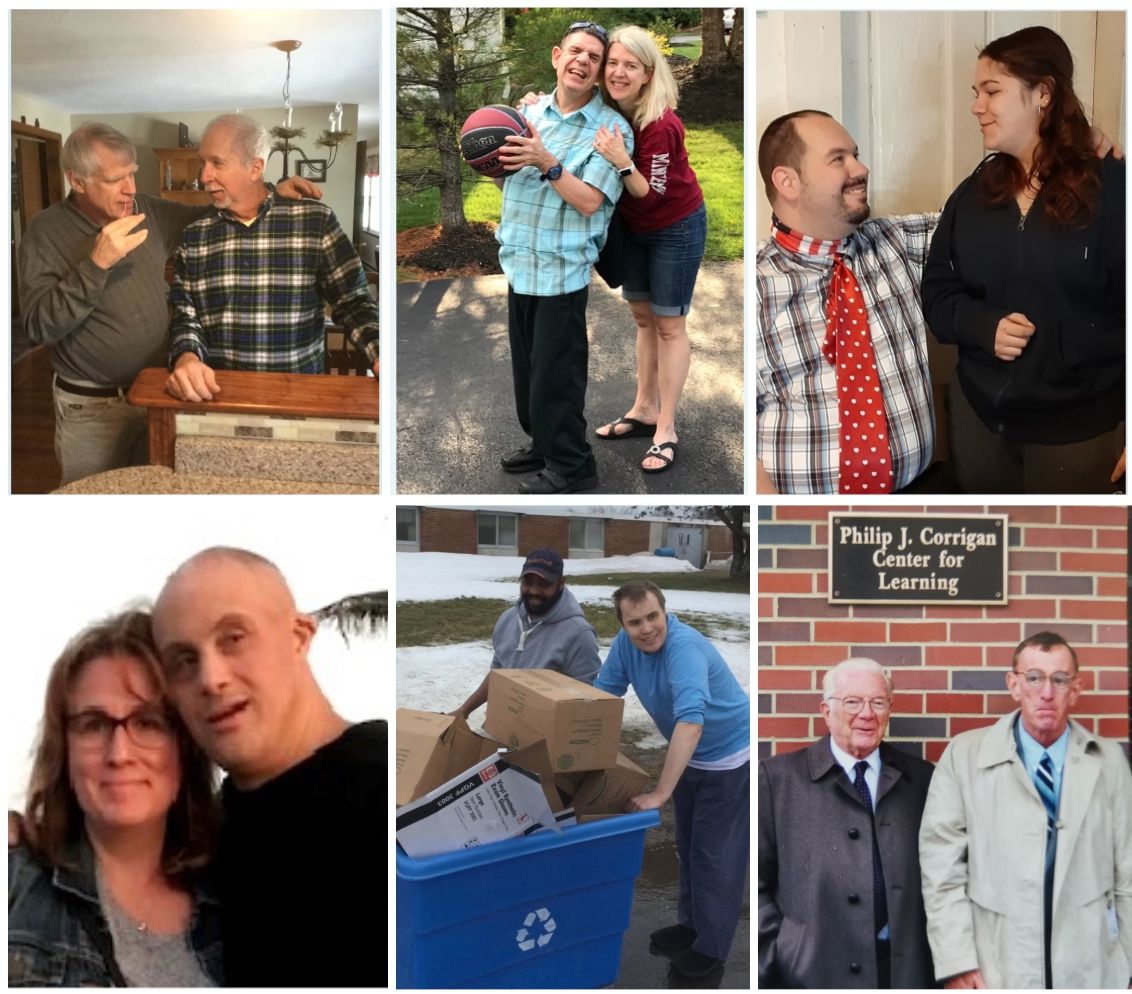
We are also deepening our outreach to legislators in opposition to bills that would replace guardianship with Supported Decision-Making (SDM), possibly marginalizing family members in the decisions most impacting their loved ones.
And we are working to enlist the aid of legislators and others in our effort to protect our state’s two remaining congregate care facilities—the Wrentham Developmental Center and the Hogan Regional Center. As you know, these centers are under siege by the administration and other proponents of privatized care who fail to recognize that the facilities provide a critical backstop for the care of persons around the state with the most profound levels of intellectual disability and the most serious medical issues.
We are further committed to the preservation and adequate funding of the state’s network of DDS-run group homes as an additional option for families and guardians seeking residential placements for their loved ones. After all, it is imperative that individuals and their families can choose the placements that best align with their needs.
Via our blog site, we provide unparalleled scrutiny of those and other issues, such as excessive compensation paid to provider executives and underpayment of direct-care staff.
Please consider a donation of whatever amount you can afford to help us continue advocating for you. You can contribute by going to our website at www.cofar.org and by clicking on the donate link. Or, you can send a check to our address (12 North Street, Leominster, MA 01453).
Thank you, and happy holidays!
Sincerely,
Thomas J. Frain, Esq.
President
 COFAR blog